Ash vs Maple Cue Shafts: What Each Wood Does to Your Cue Ball (And Which Cues to Try)
· Mark O'Sullivan
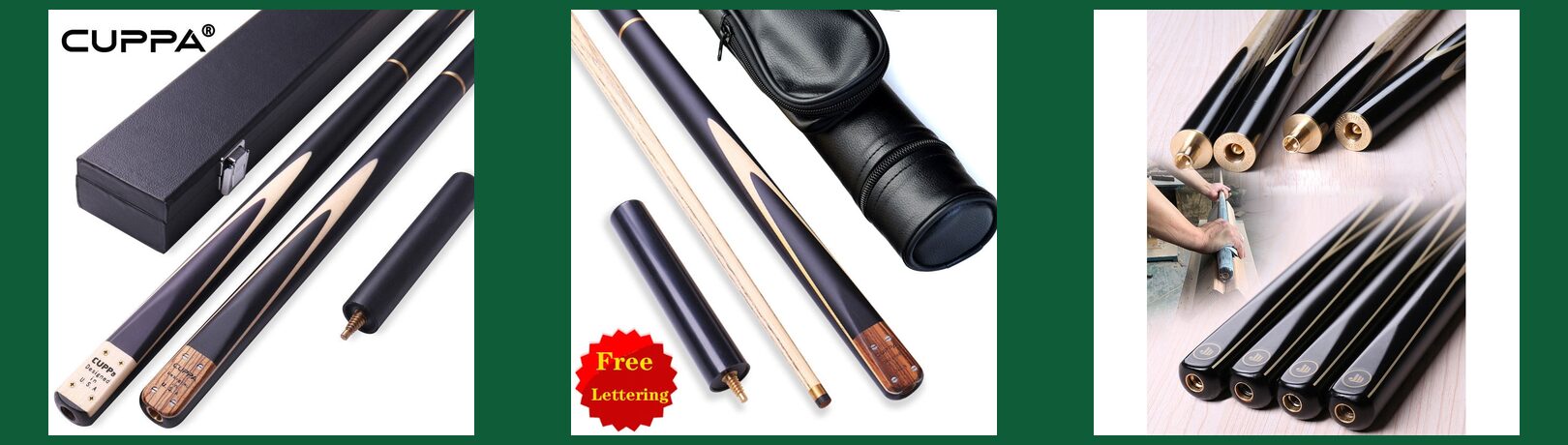
Walk into any club and you'll hear the same debate at the practice tables: is ash or maple the better shaft wood? The honest answer is that neither is objectively "best" — they simply do different things under your fingers. Understanding what each wood offers helps you buy a cue you'll actually enjoy cueing with for years, rather than one you talked yourself into.
This guide keeps things practical: how the two woods look, feel and behave, who each one suits, and a few affordable cues worth considering. As always with imported cues at this price point, expect solid honest tools rather than hand-picked professional blanks — set your expectations accordingly and you won't be disappointed.
The quick version: what actually differs
The two woods differ in three ways that matter to a player: grain appearance, feel and feedback, and stiffness.
- Ash shows those familiar dark "arrows" or chevrons running up the shaft. That visible grain isn't just decoration — many players use it to line up and to feel the cue rolling in the bridge. Ash tends to give a crisp, communicative hit with plenty of feedback.
- Maple has a much plainer, creamy, almost featureless surface with fine speckling instead of arrows. It's often described as a smoother, softer, "quieter" hit, and it's the traditional choice for American pool.
Ash: the traditional snooker choice
Ash dominates snooker for good reason. The pronounced grain gives you a reference point every time you drop into the shot, and the wood transmits a lot of information about how you've struck the ball. If you like to feel exactly what the tip is doing to the cue ball — screw, stun, swerve — ash tends to reward that sensitivity.
The trade-off is that no two ash shafts are identical. Grain spacing varies, and tighter, more even arrows are generally prized. At the affordable end you take what you're given, but a straight, well-seasoned ash shaft still plays beautifully.
Worth a look: the 2021 CUPPA 813 Ash Forelimbs Pool Cue Stick Pool Case Set 9.8mm 11mm Black China pairs a classic ash forearm with a case, while the NEW Cuppa Ash Wood 3/4 Snooker Cues Stick Case Set Billiard 9.8mm 11.5mm Tips is a straightforward 3/4-jointed ash cue with a smaller 9.8mm tip option that suits developing snooker technique. If you prefer a slightly firmer feel, the 2022 New Billiards JIAN YING SD Series Snooker Cue 10mm Tip Ash Shaft Snooker Cue Case Set offers a 10mm-tip ash build with a case set.
Maple: smoother, quieter, and made for pool
Maple's plainer look is a matter of taste — some players love the clean, unbroken timber, others miss the arrows to sight along. What's more consistent is the feel: maple typically plays a touch softer and warmer, with a slightly muffled hit compared to ash's crispness. Because it's the standard for American pool, most pool cues you'll meet are maple.
If you're playing on a pool table with a bigger tip and a chunkier cue ball, maple's forgiving feel and larger typical tip diameters make a lot of sense. The CUESOUL 58" 19oz DS Maple Pool Cue Stick Set with 2 Shaft,13mm Tip Hard Cue Case 1x1(Cue Set and Cue Shaft only for your choice) is a proper two-shaft pool set with a 13mm tip and hard case — a sensible one-cue solution for a home pool table.
Prefer maple in a snooker format? The Cuppa Handmade 3/4 Snooker Cue Case Set A/B Type Snooker Cues 9.8mm Bright Paint Cracking Prevention Maple Shaft China uses a maple shaft in a 3/4-jointed snooker cue with an anti-cracking lacquer finish and a case.
Side by side
Here's how a few catalog options stack up, so you can match wood and format to your game.
Which should you choose?
Cut through the folklore and it comes down to how you play and what you play on:
- Play mostly snooker and want maximum feedback? Choose ash. The grain helps with sighting and you'll feel spin more clearly.
- Play mostly pool, or prefer a smoother, more forgiving hit? Maple is the natural fit, especially with a larger tip.
- Undecided? Handle both if you can. Roll each shaft on a flat surface to check it's straight, and note which grain and feel you instinctively prefer. Comfort beats theory every time.
One thing that matters more than the wood debate: the tip. Whatever shaft you choose, a good tip transforms how the cue plays. Upgrading to a quality layered tip like the Japanese Original KAMUI Clear Cue Tips Billiard Pool Cue KAMUI Tip 14mm SS/S/M/H Snooker Tip Brown 11mm M/MH Billiard Accessory can make a modest cue feel considerably more consistent than a fancier shaft with a worn, glazed tip.
Looking after either wood
Both woods stay true with the same simple care. Store the cue upright or flat — never leaning at an angle against a wall — keep it away from radiators and damp, and wipe the shaft down after sessions to stop grime building up. A lightly worn ash or maple shaft that's been cared for will always outplay a neglected premium one.
The bottom line
Ash gives you feedback and a grain to sight along; maple gives you a smoother, quieter, forgiving hit. Neither is superior — they're different tools for different tastes and different tables. Pick the format that matches the game you actually play, choose the feel you enjoy in the hand, keep the tip in good order, and you'll have a cue that serves you well for a long time.