Choosing Your First Snooker Cue: Tip, Weight, Budget and Fit
Published · Updated · Mark O'Sullivan

Choose a 9.8–10mm tip, 17–19oz weight, 57in length and a 3/4-jointed cue with a case for around £130–£165.
Buying your first proper snooker cue can feel more complicated than it needs to be. Tip diameters, shaft woods, joints, balance points — it's a lot of jargon when all you actually want is something that helps you pot a few balls and improve. The truth is you only need to understand a handful of specifications to buy sensibly, and none of them require you to spend a fortune.
A quick note on honesty before we start: most cues at the entry and mid level — including many of those linked below — are imported and mass-produced rather than hand-spliced English cues costing several hundred pounds. That's not a criticism. They offer genuinely good value and will happily teach you proper technique, but you should buy with realistic expectations rather than imagining you're getting a bespoke maker's cue for £140.
Start with fit, not price or looks
A cue is a tool you swing hundreds of times a session, so how it fits your body and hand matters more than its finish or badge. Get these three things right first and everything else is refinement.
Length
Standard snooker cues run 57–58 inches (145cm), which suits most adults comfortably. If you're teaching a child or buying for someone shorter, a smaller assembled cue is more manageable. If you're tall, don't hunt for an oversized cue — add a Snooker Cue Extender Adjustable Length Telescopic Cue Extension later for those long stretches across the table.
Weight and balance
Most snooker cues weigh 17–19oz, and most players settle around 18oz. Lighter cues (17–17.5oz) feel nimble and reward a smooth, controlled action; heavier cues (18–19oz) feel more stable and deliver power with less effort but can feel clumsy on delicate safety shots. There's no correct figure — as a beginner, anything in this range is fine, and consistency of technique matters far more than shaving off half an ounce.
Balance point is the underrated factor. Rest the cue across one finger and see where it settles — roughly 16–18 inches from the butt suits most players. If a cue feels distinctly butt-heavy or tip-heavy in your hands, you'll fight it every session, so trust how it feels over the numbers on a listing.
Tip size: the number you'll see first
Snooker uses small balls and fine cueing, so snooker tips are narrow — typically 9mm to 11.5mm, compared with the 11–13mm tips common on pool and bar cues. A wide pool tip will hold you back on a snooker table, so match the cue to the game you're actually playing.
A smaller tip (9.5–10mm) gives finer control over spin and is the traditional snooker choice. A larger tip (10.5–11.5mm) is more forgiving and easier to strike cleanly, which suits complete beginners, a smaller home table, or anyone mixing snooker with pool. If you're unsure, aim for around 9.8mm to 10mm — small enough to develop accurate cue-ball control, but tolerant of a slightly off-centre hit.
The 2022 New Billiards JIAN YING SD Series Snooker Cue 10mm Tip Ash Shaft Snooker Cue Case Set sits right in that sweet spot, while several Cuppa models offer a choice of tip sizes on the same cue so you can pick what feels natural, such as the High Quality Omin Handmade 3/4 Snooker Cues Stick Billiard 9.5mm/10mm/11.5mm Tip China.
One-piece, two-piece or 3/4 jointed?
This decision is really about portability versus feel, and none of the three "plays wrong":
- One-piece: traditional feel with no joint to interrupt the strike, and often the cheapest for what you get. Good if you have a dedicated room at home and rarely move the cue.
- Two-piece (centre joint): splits in half for portability — the most common budget format, ideal for a shared household or casual practice.
- 3/4 jointed: the joint sits high up the butt, away from your bridge hand, so it folds down for a case while keeping a near one-piece feel through the strike. For most beginners taking a cue to a club, this is the sweet spot.
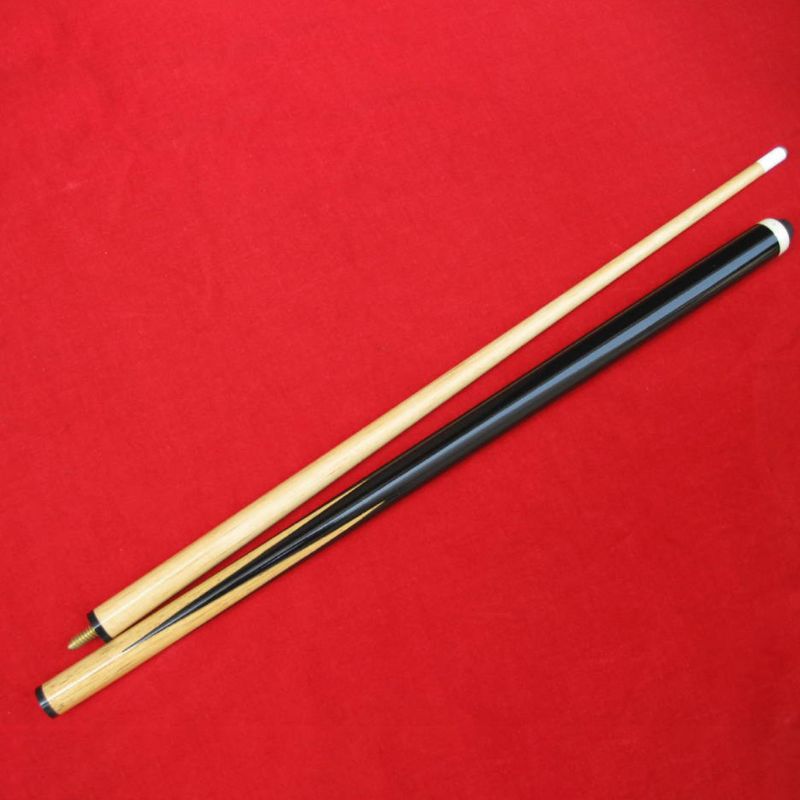
The NEW Cuppa 3/4 Snooker Cues Stick 9.8mm 11.5mm Tip with Snooker Cue Case Set is a sensible, balanced 3/4 option that arrives with a case, and the NEW Cuppa Ash Wood 3/4 Snooker Cues Stick Case Set Billiard 9.8mm 11.5mm Tips is a similarly solid, no-drama first proper cue. If you'd like a bit more character in the butt and a built-in extension, the Handmade Cuppa 3/4 Snooker Cues Sticks 9.8mm Tips With Extension Ebony Wood Handle China Anti Cracking Lacquer Craft adds an ebony handle and anti-cracking lacquer. For an ultra-budget starting point that gets a whole household playing, the 2 Pcs 145cm/57inch American Snooker Wood Pool Cue Assemble Children Adult Home Billiards Exercising Entertaining Tools Supply costs very little, though it's a casual knockabout cue rather than a serious learning tool.
Shaft wood and build
Ash and maple are the two classic snooker shaft woods. Ash shows the familiar "arrow" grain markings, which many players use as a visual aid for cueing straight; maple is paler, smoother-looking and slightly stiffer to many hands. Neither is objectively better — it comes down to feel and looks, and if you can, hold a few before committing.
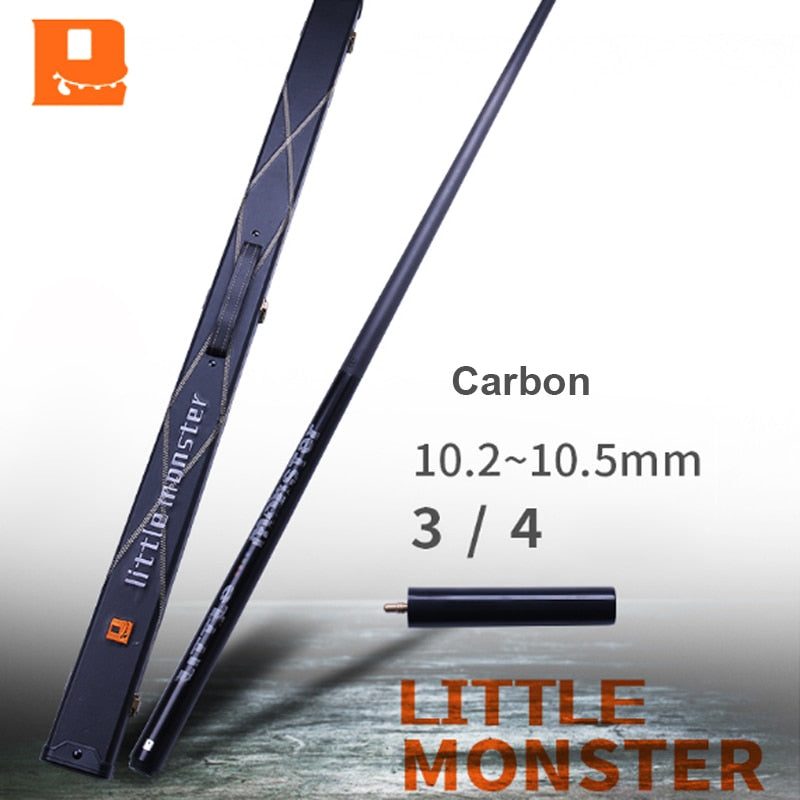
Carbon-composite shafts are the modern alternative, offering low deflection and complete resistance to warping and humidity. They feel noticeably different to timber and aren't to everyone's taste. The CUPPA New Arrival Little Monster Carbon Billiard Snooker Cue Stick 10.2mm Tip with Snooker Cue Case Set is a good example, but it sits at the premium end and rewards a repeatable action you likely haven't developed yet as a beginner — it's a cue to aspire to rather than to start on.
What should you actually spend?
Ask five snooker players what a beginner should spend and you'll get five answers, mostly shaped by what they happened to buy. The honest answer depends on how often you'll play, whether you own a table, and how committed you already are.
Budget: try-before-you-commit
At this level you're buying a functional stick, not a keepsake. Straightness can vary, the tip is basic, and the finish won't match a dedicated snooker cue. It's genuinely useful as a knockabout cue for a home table or a way to confirm you enjoy the game before spending more — just don't expect the fine feedback that helps you learn safety play and screw shots. The 2 Pcs 145cm/57inch American Snooker Wood Pool Cue Assemble Children Adult Home Billiards Exercising Entertaining Tools Supply and the 48in 1/2 Structure 1pcs Wooden Pool Cues Billiard House Bar Pool Cues Sticks Entertainment Snooker Accessories Billiard Tools both fit this bracket, though the latter's wider tip and shorter length suit pub-style pool more than snooker.
Mid-range: the beginner sweet spot
This is where most serious beginners should look. For this money you get a purpose-built snooker cue — usually an ash shaft, a properly fitted tip, a decent joint on 3/4 models, and almost always a case thrown in. The step up in straightness and feel over the budget tier is noticeable, and a cue here will comfortably see you through your first few years. The 2019 NEW Updated HY Cuppa Snooker Cue Stick 9.5mm 9.8mm 11.5mm Tip Snooker Cue Case Set is a sensible starting point with a choice of tip sizes, and the New Arrival Cuppa 3/4 Snooker Cues Sticks 9.8mm Tips Snooker Cue Brands China is a solid, no-nonsense representative of this tier. If you'd prefer a continuous one-piece taper, the BS New Arrival One Piece Billiard Snooker Cue Stick 10.2mm Tip with Hard Snooker Cue Case Set gives you that, provided you can store and carry it safely.
Premium: lovely, but not essential for beginners
Premium carbon cues use stiffer, low-deflection construction that's genuinely consistent — but the benefits reward players who already have a repeatable action. As a beginner, your cueing technique will change a great deal in the first year, so spending big now risks buying a cue that suits a technique you haven't developed yet. Bank the money for lessons and table time instead, which will improve your game far more than a pricier stick.
Comparing a couple of starting points
Don't forget the small extras
A cue is only part of the kit, and a few inexpensive extras make any cue play noticeably better from your very first session:
- Chalk is non-negotiable. It prevents miscues and lets you apply spin cleanly. A cheap multipack like the 4pcs Cheap Billiards Snooker Cue Chalk Billiard No-slip Chalk Indoor Sport Accessories lasts ages and costs next to nothing, and is genuinely the most cost-effective upgrade at this stage.
- A glove helps if your bridge hand drags or sweats on the shaft. The Spandex Snooker Billiard Cue Glove Pool Left Hand Open Three Finger Accessory for Unisex Women and Men 4 Colors 1Pcs gives a smoother, more consistent slide, though plenty of players get on fine without one.
- A case protects your cue from warping and knocks. Many mid-range cues include one, so check before buying separately.
- An extension helps with reach on awkward long shots, but there's no need to buy one on day one — get comfortable with a standard cue first.
Common first-cue mistakes to avoid
- Buying a pool cue for snooker. A wide 11–13mm pool tip will hold back your control on a snooker table. Match the cue to the game.
- Chasing the heaviest or most decorated cue. Looks and weight don't equal control — comfort and straightness matter more.
- Skipping chalk. A large share of beginner miscues vanish once you chalk properly and often.
- Over-spending too soon. Learn on affordable kit, then upgrade to a premium or carbon cue once you know your preferences.
So which should you buy?
For most beginners, a 3/4 jointed cue with a 9.8–10mm tip, around 18oz and 57in, supplied with a case, is the smart sweet spot. It's portable, plays like a "real" snooker cue, and won't feel outgrown the moment your game improves. If you're still deciding whether snooker is for you, a sub-£30 cue is a fair low-risk trial; leave the premium carbon cues until your action has settled. Spend your remaining budget on good chalk and a glove rather than chasing the most expensive cue you can find — buy with realistic expectations, look after the cue, and you'll have a faithful companion that lets you focus on the only thing that truly lowers your scores: practice.
Frequently asked questions
What tip size is best for a beginner?
Around 9.8mm to 10mm is a sensible middle ground for most beginners. It's small enough to develop proper cue-ball control but forgiving enough to tolerate a slightly off-centre strike while you're learning.
How heavy should my first snooker cue be?
Most cues sit between 17oz and 19oz, and 18oz is a safe middle ground for a beginner. Don't overthink small weight differences — comfort and a consistent action matter far more than the exact figure.
Should I buy a one-piece or a jointed cue?
Choose based on how you'll use it, not which "plays better". A one-piece suits a dedicated home table you never move; a 3/4-jointed cue splits down for transport to a club while keeping a near one-piece feel.
Is ash or maple better for a beginner?
Neither is objectively better — it's down to feel and looks. Ash shows visible grain "arrows" some players use as a cueing guide, while maple is smoother and slightly stiffer; try a few if you can.
How much should a beginner spend on a first cue?
If you're still deciding whether snooker is for you, a sub-£30 cue is a fair low-risk trial. If you're committed and playing regularly, £130–£165 buys a proper cue-and-case set that will last years.
Do I need a carbon-shaft cue as a beginner?
No. Carbon cues offer low deflection and resist warping, but they reward players with an already-repeatable action. Your technique will change a lot in your first year, so it's better to save this purchase for later.
What accessories should I buy alongside my first cue?
Chalk is essential from day one and costs very little. A glove can help if your bridge hand drags, and a case protects the cue from warping and knocks — many mid-range cues already include one.
Can I use a pool cue to play snooker?
You can, but it's not ideal. Pool cues typically carry wider 11–13mm tips suited to larger balls, which feel clumsy and imprecise on a snooker table with its smaller balls and tighter pockets.