Best Cue Tips Compared: Types, Layers, Budget vs Premium
Published · Updated · Mark O'Sullivan

Cue tips range from 20p screw-ons to premium layered leather — matching type, hardness and diameter to your game matters more than price.
The tip is the only part of your cue that actually touches the ball, yet it's the part most players overlook. A worn, glazed or wrongly sized tip will rob you of power, spin and consistency long before your shaft or your stance is to blame. The good news is that a quality tip is one of the cheapest upgrades in the game, and fitting a new one is a skill worth learning.
This guide brings together everything that actually matters — hardness, diameter, construction and fitting method — and compares the main options so you can match a tip to your cue and the way you play, without falling for marketing hype.
Why the tip matters more than you think
Every screw, every safety, every long pot transfers through a piece of leather smaller than a five-pence coin. As it wears, it flattens, hardens and starts to deflect the cue ball unpredictably. Most club players leave a tip on far too long, then blame their technique. If you can't remember when you last changed yours, it's probably overdue.
Three qualities decide how a tip performs: how hard it is, how wide it is, and how cleanly it holds chalk. Get those right and you'll feel the difference on the very next frame.
The main types of cue tip
Almost every tip you'll come across falls into one of four groups. Understanding them makes the buying decision far simpler.
Screw-on tips
A plastic or metal-fitted tip that threads directly into a matching ferrule — no glue, no clamping, no drying time. They're the fastest fix going for a house cue, kids' cue or bar setup, and a five-minute swap keeps everyone playing. The 10PCs/set Screw On Cue Tips (10mm, snooker) and the wider 5PCs 13mm Screw On Cue Tips (pool) cost pennies and cover most ferrule sizes. Be honest about expectations though: the plastic body doesn't grip chalk like leather, feedback is duller, and serious players won't fit one to a cue they love. They also only work on cues already built with a threaded ferrule — you can't retrofit them.
Glue-on single-layer tips
The traditional route, and still the standard for any decent cue. You sand the old tip off, prep the ferrule, then bond a solid disc of pressed leather with cue adhesive and shape it. Buy in bulk and the per-tip cost is tiny, which makes packs ideal for practising the fitting process — a couple of botched attempts cost nothing when you've got dozens to play with. The catch is variability: density can differ tip to tip in the same packet, so expect to sort through and pick the denser ones.
Baked suede / pressed leather tips
A step up in feel and consistency without paying premium prices. The CUESOUL 6pcs/set 14mm Baked Pig Suede Billiard Snooker Cue Tip & Pool Cue Tip is a good example — baked pig suede holds chalk nicely and offers a warmer, more predictable strike once it's bedded in. At 14mm it suits pool and American-style cues rather than a slim snooker shaft, and it's a sensible mid-range choice if your current tip feels glassy and unresponsive.
Layered (laminated) premium tips
This is where the premium money goes. Layered tips bond thin sheets of leather together, which resists the mushrooming and splitting that plague soft single-layer tips and gives a far more predictable, repeatable hit shot after shot. The Japanese Original KAMUI Clear Cue Tips (14mm pool / 11mm snooker, SS-H) is the benchmark, offered across several hardness grades so you can dial in exactly the feel you want. If you play regularly, take spin seriously and want a tip that behaves the same in week ten as in week one, this is the upgrade that justifies its price — though fitting one properly still repays care and patience.
Quick comparison
| Product | Guide price | |
|---|---|---|
 Japanese Original KAMUI Clear Cue Tips (14mm/11mm, layered) Japanese Original KAMUI Clear Cue Tips (14mm/11mm, layered) |
£19.59 | View → |
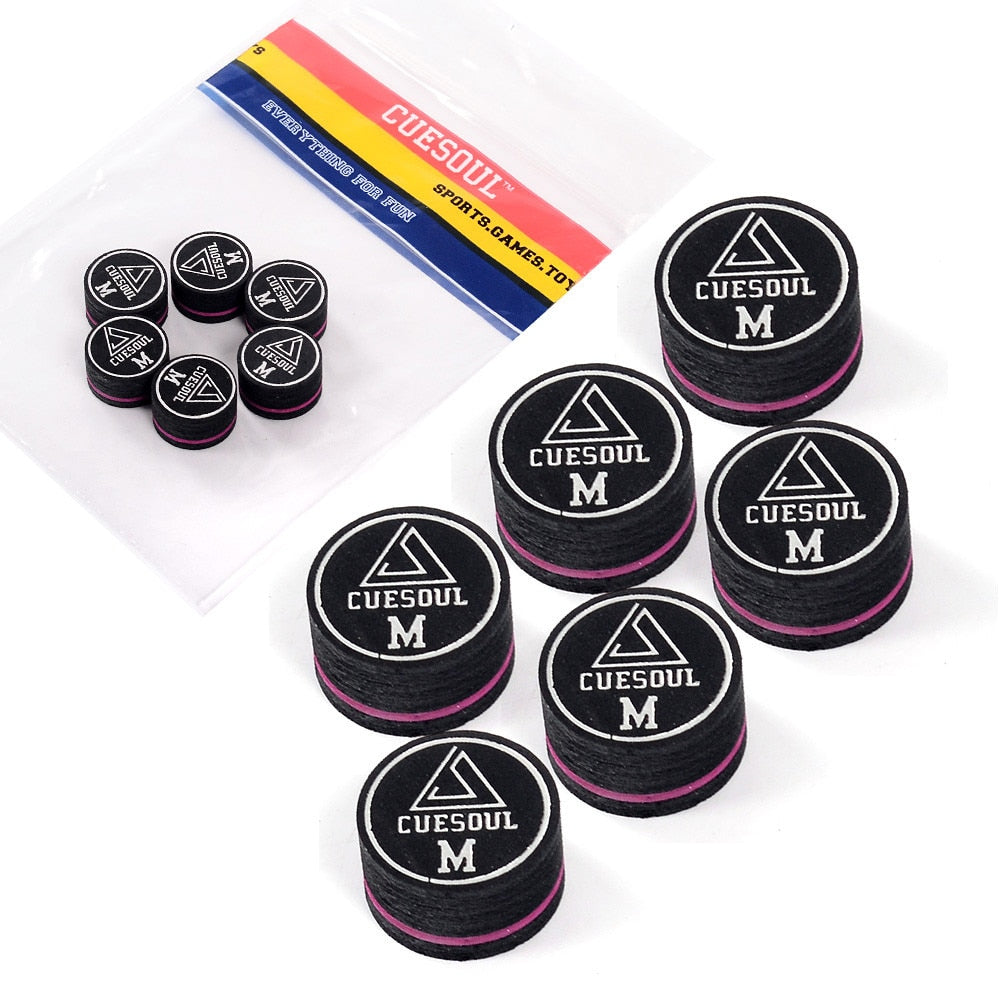 CUESOUL 6pcs/set 14mm Baked Pig Suede (single-layer) CUESOUL 6pcs/set 14mm Baked Pig Suede (single-layer) |
£31.19 | View → |
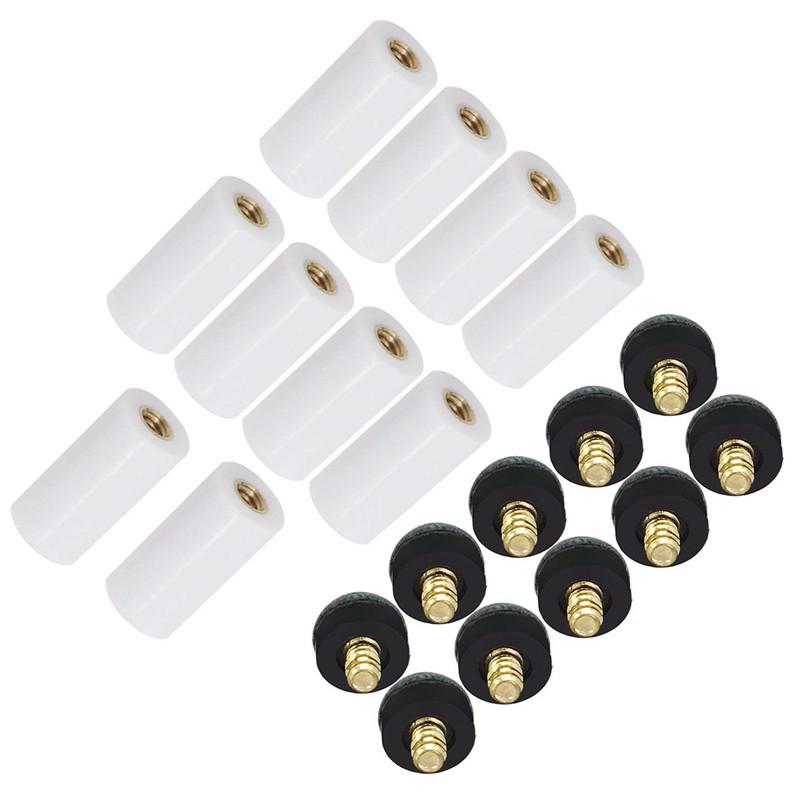 10PCs/set Screw On Cue Tips (10mm, snooker) 10PCs/set Screw On Cue Tips (10mm, snooker) |
£3.41 | View → |
Hardness: soft, medium or hard?
Hardness is the single biggest feel decision, and it's largely a matter of preference and discipline.
- Soft tips grip the ball for a fraction longer, making side and screw easier to generate. They compress and mushroom faster, and need more frequent reshaping — good for touch players who love spin and swerve.
- Medium tips are the sensible default if you're unsure. They flatter more cue actions than any other choice, balancing grip and durability.
- Hard tips hold their shape longer, transmit a crisp, direct hit and suit power potting, but they demand disciplined, clean chalking to avoid miscues.
Snooker players traditionally lean medium to hard, because the smaller ball and precise cue-ball control reward a consistent, low-deflection strike. Pool players chasing draw and follow often prefer a slightly softer tip for the extra bite. If you're unsure, start medium — you can always move harder or softer once you know what your game asks for.
Diameter: match it to your ferrule, not the trend
Snooker cues typically wear thinner tips — usually around 9.5mm to 11mm — for fine control on a tight pocket. Pool cues, English and American, run wider, commonly 12mm to 14mm, to suit larger balls and a more power-based game.
The cardinal rule: the tip must match the diameter of your ferrule. Fitting a 14mm tip to an 11mm shaft (or vice versa) leaves an overhang or shortfall you'll have to file down, and it never feels quite right. A slightly oversized tip that you trim flush to the ferrule is fine; an undersized one is not. If you're buying a batch to practise re-tipping, choose the diameter closest to your own ferrule so you're doing minimal trimming.
Glue-on vs screw-on: how the tip attaches
Glue-on tips give the best hit because the leather bonds directly to the ferrule with no hardware in between. They're the standard for any serious cue but require fitting — sand the ferrule flat, apply a thin even layer of glue, clamp firmly, then trim and dome the tip to match the shaft. It's a little more effort, but the reward is a solid, connected feel that screw-ons can't match.
Screw-on tips trade a little feel for pure convenience: unscrew the old one, wind in the new one, keep playing. They're ideal for house cues, kids' cues and casual games where nobody wants to wait for glue to cure — but only if your cue already has a threaded ferrule, since you can't retrofit them to a standard cue. Treat them as a stopgap rather than a match-cue solution.
Snooker vs pool: what actually changes
Snooker rewards a smaller, harder tip. The narrow diameter suits the fine cue-ball control and screw the game demands, and a firmer tip gives cleaner deflection and longer life. Pool players often prefer a slightly softer, larger tip for grip and comfort on heavier balls. If you play both disciplines seriously, it's worth keeping two cues, or at least two shafts, rather than compromising with one tip that suits neither game well.
Matching a tip to how you actually play
The casual home or bar player
Don't overthink it. A screw-on set keeps a house cue playable and costs pennies. Spend the difference you save on decent chalk instead — it does more for your game at this level than any tip upgrade.
The improving club player
Once your action is repeatable, a quality single-layer or suede tip in medium hardness pays off. This is the sweet spot for most readers — enough grip for control, enough durability to last, and consistent feedback that lets you diagnose whether a missed shot was you or the equipment.
The keen player chasing feel
If you already play regularly and know your preferred hardness, a premium layered tip is a justified indulgence. You'll notice the difference in how it holds chalk and releases the ball — but largely because your technique is good enough to feel it.
Fitting and looking after your tip
Screw-on tips are foolproof. Glue-on and layered tips need a little patience: a flat, clean ferrule, a thin even layer of glue, firm clamping and careful shaping to match the shaft's dome. If you're new to it, buy a bulk pack and practise on a spare cue before touching your good one — a botched fit plays worse than a cheap tip fitted correctly.
Once fitted, keep a slight dome on the face so you can strike off-centre cleanly, and rough the surface lightly so it accepts chalk. A simple burnisher/cleaner/polisher set helps roughen a glazed tip and tidy the edges between sessions.
Don't forget the chalk
Even the finest tip will miscue with poor or worn chalk, and no chalk can rescue a glazed, badly shaped one — the two work as a system. A cheap, reliable option like this 4pcs Cheap Billiards Snooker Cue Chalk keeps a fresh cube always to hand. Chalk the whole dome lightly before every shot where you're applying spin, not just the centre, and you'll all but eliminate miscues. A new tip usually needs a few frames of "chalking in" before it settles and grips reliably.
Setting honest expectations
Most of the tips covered here are affordable, imported products, and quality can vary within a batch — that's the nature of budget leather and moulded plastics. That's genuinely fine for house cues, spares and casual play, where a screw-on or bulk glue-on does exactly what's needed. If you play regularly and want dependable spin and feel, spend up to a layered tip and fit it carefully, or have it fitted. The jump in consistency is usually the single most noticeable upgrade a serious player can make — far more than an expensive shaft.
The bottom line
- Casual player with a house or bar cue: a screw-on set for hassle-free swaps, paired with decent chalk.
- Improving club player: a quality single-layer or baked suede tip in medium hardness, fitted properly.
- Serious snooker player: a layered tip in a medium-to-hard grade and the correct narrow diameter.
- Pool player wanting more spin: a softer glue-on or layered tip in the correct wide diameter.
- Learning to fit your own: a bulk glue-on pack to practise on before you touch your best cue.
Match the type to your commitment, the hardness to your action, and the diameter to your ferrule, and you'll rarely be let down. A few pounds and twenty minutes of patience will give you a cleaner strike, better spin and more confidence on the table — and that's a bargain in anyone's book.
Frequently asked questions
How often should I change my cue tip?
There's no fixed mileage, but if the tip looks flattened, glazed or mushroomed over the edge of the ferrule, it's overdue. Many club players go years too long simply because the decline is gradual and easy to blame on technique instead.
What hardness of tip should a beginner choose?
Start with medium. It's the least likely to annoy you while you work out your preferences, offering enough grip for spin and enough durability to last, and you can move harder or softer once you know what your game actually needs.
Can I fit a pool-sized tip to a snooker cue?
Not sensibly. Snooker ferrules typically run 9.5–11mm and pool ferrules 12–14mm, and forcing a wide tip onto a narrow ferrule means filing away most of the leather, which weakens the edge and looks scruffy. Always buy a tip close to your actual ferrule diameter.
Are screw-on tips any good for a serious cue?
Not really. They're a fast, cheap fix for house cues, kids' cues and bar setups with a threaded ferrule, but the plastic fitting dulls feedback and doesn't grip chalk like bonded leather, so most serious players avoid them on a cue they care about.
What's the real difference between layered and single-layer tips?
Layered tips are bonded from thin leather sheets, which resists mushrooming and holds a domed shape far longer, giving a more repeatable hit as the tip wears. Single-layer tips are a solid pressed disc of leather — cheaper and perfectly playable, but quality varies more between individual tips.
Does chalk really matter as much as the tip itself?
Yes. Even a premium layered tip will miscue with worn or glazed chalk, and a fresh, grippy chalk applied properly across the whole dome does as much for cue-ball control as the leather underneath it.
Can I fit a new tip myself?
Glue-on fitting just takes a flat, clean ferrule, a thin even layer of adhesive, firm clamping and careful shaping — it's a learnable skill, and a bulk pack of cheap tips is the ideal way to practise before you touch your good cue. Screw-on tips need no skill at all, just a compatible threaded ferrule.
Should snooker and pool players use the same tip?
Not ideally. Snooker rewards a smaller, harder tip for precise control, while pool players often prefer a slightly softer, wider tip for grip and comfort on heavier balls, so if you play both seriously it's worth keeping separate cues or shafts.