Chalk and Tip Together: Why Grip at the Point of Contact Decides Your Shot
· Mark O'Sullivan
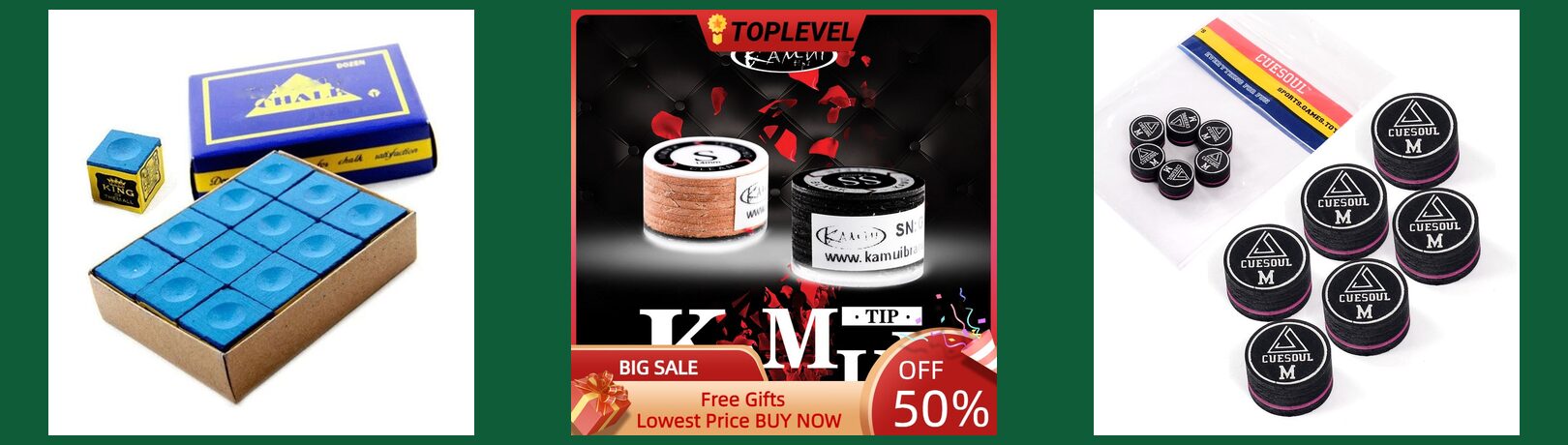
Most players think about chalk and cue tip as two separate purchases. They aren't. The only thing that matters when you strike the cue ball is what happens in the tiny fraction of a second when leather meets ball — and that contact is a partnership between your tip and the chalk sitting on it. Get the pairing right and you'll cue with confidence, especially on screw and side. Get it wrong and you'll miscue, blame your action, and never think to check the cube.
This guide looks at chalk and tip as a single system: how they interact, how to match them to your cloth, how to apply chalk so it actually grips, and when to throw an old cube away.
Why chalk and tip can't be judged separately
Chalk works by filling the microscopic pores of the tip's leather with grit, increasing friction between tip and ball. A hard, tightly compressed tip has fewer open pores, so it needs chalk that clings well and a slightly more diligent chalking routine. A soft, spongy tip grabs and holds chalk more readily but wears faster and mushrooms sooner. The chalk you'd happily use on one can feel slippery on the other.
That's why "which chalk is best" is the wrong question. The better question is: does this chalk grip the tip I'm actually playing with, on the cloth I'm actually playing on?
Match your chalk to your tip type
Start by knowing what's on the end of your cue. A premium layered tip such as the Japanese Original KAMUI Clear Cue Tips Billiard Pool Cue KAMUI Tip 14mm SS/S/M/H Snooker Tip Brown 11mm M/MH Billiard Accessory is engineered to hold shape and take spin, and it rewards clean, consistent chalking rather than heavy grinding. A traditional suede tip like the CUESOUL 6pcs/set 14MM Baked Pig Suede Billiard Snooker Cue Tip & Pool Cue Tip has a more open surface that accepts chalk easily. And a basic replacement glue-on from a bulk pack such as the will be harder and less forgiving, so it benefits from a chalk that lays down a good coat.
Whatever the tip, a decent everyday cube does the job for the vast majority of club and home players. A multipack like the 4pcs Cheap Billiards Snooker Cue Chalk Billiard No-slip Chalk Indoor Sport Accessories is honestly all most people need — imported, inexpensive, and perfectly serviceable. Be realistic about it: it won't magically add spin, but a fresh, well-applied cube will keep you off the miscue line, which is 90% of the battle.
Don't forget the cloth
Chalk colour matters more for housekeeping than for play. Green chalk keeps mess discreet on green baize; blue is the traditional choice but shows up as dust on the cloth and cue ball. If you play on a home table, that residue transfers to the balls and dulls their roll. Keeping a clean practice ball to hand — something like the Billiard Cue Ball Durable Resin Billiard Practice Training Pool Cue Ball Snooker Training Balls Cueball 57mm Table Ball Practice — makes it obvious how much chalk you're shedding, because you'll see it building up between wipes.
How to apply chalk so it actually works
Application is where most miscues are born. The two big errors are chalking too little and grinding too hard.
- Brush, don't drill. Sweep the chalk lightly across the tip so it coats the whole dome, not just the centre. Spinning the cube like a pencil sharpener wears a crater in the chalk and leaves the edges of your tip bare — exactly where side shots make contact.
- Chalk before every shot that needs it. Any shot with power, screw or side deserves a fresh coat. A gentle rolling shot up the table doesn't.
- Keep the tip shaped. Chalk grips a domed tip far better than a flat, glazed one. A little tip maintenance keeps the surface receptive.
- Don't over-chalk. A thick, caked coat can actually reduce contact quality and dumps excess onto the cloth and ball.
Chalk and tip maintenance go hand in hand
A glazed or dirty tip won't hold chalk no matter how good the cube is. Over weeks, tips compress and pick up a shiny film that repels grit. Lightly scuffing the surface restores the pores. It's also worth keeping the shaft and ferrule clean, since chalk dust migrates everywhere; a simple tool like the 1/2/3pcs Professional Billiard Pool Cue Burnisher Cleaner Polisher Home Cleaning Snooker Pole Training Pool Ball Accessories helps you keep the business end tidy and the shaft running smoothly through your bridge hand.
When to bin a cube of chalk
Chalk doesn't last forever. Replace it when:
- The surface has worn into a deep, uneven crater that can no longer coat the whole tip.
- It's cracked into fragments that skate across the leather instead of depositing grit.
- It has picked up grease or moisture and glazes over rather than powdering.
A cube costs pennies, so there's no sense nursing a knackered one through a losing session. Keep a spare in your case.
The bottom line
Think of chalk and tip as a single contact system rather than two shopping-list items. Choose a chalk that grips the tip you play with, apply it in light, full-coverage strokes, keep the tip receptive, and swap the cube out when it's past it. Do that and you'll cue with real confidence — for the price of a decent multipack and a few good habits. It's the cheapest reliable upgrade in the game, and one nearly everyone overlooks.