How to Choose a Snooker Cue Case: Hard/Soft, Fit and Protection
Published · Updated · Mark O'Sullivan

Pick a case that matches your cue's format, holds it snugly, and is rigid enough for how you actually travel with it.
A good snooker cue is an investment, and the case is the unglamorous bit of kit that keeps it straight, dry and undamaged between frames. Plenty of players spend carefully on a cue and then bundle it into whatever bag came free with it, only to find a warped shaft or a dinged ferrule a season later. Most cue damage doesn't happen at the table anyway — it happens in the boot of a car, on a crowded train, or leaning in a hallway where someone knocks it over. This guide walks through everything that separates a case that merely carries your cue from one that genuinely protects it.
Hard case or soft case?
The first decision is the type of shell, and it comes down to how you travel and store your cue. Cases broadly fall into three camps:
- Soft tubes and slip bags are light and cheap but offer little more than dust and scratch protection. Fine for carrying a cue across a quiet club room; risky on public transport or in a car boot.
- Semi-rigid cases use a padded fabric body over a stiffened shell — a sensible middle ground for players whose cue mostly goes from home to a local club and back.
- Hard cases use a rigid tube, moulded shell or box. They resist crushing, knocks in the car boot and being leaned against a wall or sat on. If your cue travels with you, rides in a car, or gets handed around, this is where your money belongs.
Honest steer: if in doubt, go hard. The extra weight and bulk is a small penalty compared with the peace of mind. Budget cue-and-case sets often pair the cue with a hard case from the outset, which saves you buying a case separately — the BS New Arrival One Piece Billiard Snooker Cue Stick 10.2mm Tip with Hard Snooker Cue Case Set is a good example, since a full-length one-piece shaft has nowhere to hide and needs the extra armour.
Match the case to your cue's build
This is the detail people overlook, and it's arguably more important than hard versus soft. Cases are designed around how a cue comes apart, and buying the wrong length or compartment count means your cue either rattles around loose or won't fit at all.
One-piece cues
These are the longest to carry, typically around 57–58 inches, and need a full-length case. They're the most demanding to transport, so don't skimp on the shell — a rigid tube keeps the shaft dead straight.
3/4-jointed cues
These split roughly three-quarters of the way up into a longer butt and a shorter shaft, so they pack into a shorter, more manageable case with at least two compartments, ideally three so an extension has its own space too. This is exactly why so many quality cues are sold as matched sets — the case is cut to suit the cue. The Cuppa Handmade 3/4 Snooker Cue Case Set A/B Type Snooker Cues 9.8mm Bright Paint Cracking Prevention Maple Shaft China is built around a 3/4 cue, so the butt and shaft sit snugly rather than knocking together.
Two-piece (centre-jointed) and pool-style cues
These break neatly at the centre and suit a compact half-length case. Sets built for this format, such as the CUESOUL 58" 19oz DS Maple Pool Cue Stick Set with 2 Shaft, 13mm Tip Hard Cue Case, are worth a look if you also play pool or want a spare shaft ready to go.
Capacity: what does your case actually need to hold?
A quieter mistake than getting the shell wrong is buying a case that doesn't match what you carry. Wedging a spare shaft alongside your butt, forcing an extension into a pocket that won't close, or rattling loose chalk around a compartment never meant to hold it all reduce a case's protection to almost nothing. Before comparing padding and zips, count your pieces honestly:
- One cue, one piece — a full-length tube or box that supports the cue end to end.
- One 3/4-jointed cue — a shorter case, but confirm it holds both the butt and the longer shaft section with a little room to spare.
- Cue plus spare shaft, or two cues — you need a case rated for two or more slots, each with its own channel. Don't double up in a single-cue tube; shafts knocking together is how tips and joints get chipped.
Two extras are easy to forget when sizing a case. A telescopic extension, such as the Snooker Cue Extender Adjustable Length Telescopic Cue Extension, needs a dedicated sleeve rather than being jammed in beside the shaft. And a zipped or lidded pocket keeps chalk from crumbling over everything else — useful for a couple of cubes of 4pcs Cheap Billiards Snooker Cue Chalk Billiard No-slip Chalk, a spare tip and a Spandex Snooker Billiard Cue Glove. If your case doesn't have one, factor that in — loose chalk dust migrating onto your ferrule and shaft is a nuisance you'll regret.
Fit is everything
A case only protects properly if the cue fits it correctly, and this matters more than any other single feature. You want each section held snugly with a little give — enough that it can't slide or rotate, but not so tight that you force it in and out.
Get this wrong in either direction and you cause damage. A case that's too loose lets the cue rattle around, and every bump transfers straight into the shaft and joint. A case that's too tight forces the ferrule or tip against the end and can crush it over time. Movement inside a case is what causes ferrule chips and tip damage over months of otherwise normal use.
This is why cue-and-case bundles have a real advantage: the case is cut for that exact cue, so nothing slides about in transit. The correct fit is arguably the biggest single benefit of buying a matched set rather than sourcing a case separately.
Padding, lining and joint protection
Look inside the case, not just at the outside. Features worth checking:
- Soft inner lining — felt, velour or foam — that holds the cue gently along its length and won't mark a lacquered finish. Cheaper cases sometimes use a coarse fabric that dulls a glossy shaft over months.
- A protected tip area so the most vulnerable part of the cue, the tip and ferrule, isn't pressed directly against a hard end cap. Padding or a recessed base here prevents a mushroomed or knocked tip, one of the most common forms of damage.
- Separate channels for butt and shaft on jointed cues, preventing them knocking together — this is the most common source of small joint dings.
- A structured, straight body that doesn't let the cue flex or bow in storage, which can encourage warping over months.
Handmade sets such as the Handmade Cuppa 3/4 Snooker Cues 9.8mm Tip With Black Snooker Cue Case Set Padauk Handle China and the Cuppa Handmade Snooker Cues 3/4 Snooker Cue Case Set 9.8mm Tip Burl Wood Handle are designed so the cue is well supported inside, which matters more on a finished, lacquered cue you want to keep looking sharp.
Closures, straps and the bits that fail first
Zips and clasps are usually the first things to go. A chunky zip that runs the full length, or solid clasps on a hard case, will outlast a short opening you have to feed the cue through — and a case that can spring open in transit is worse than no case at all. Check that seams are reinforced, especially at the ends that take the strain when carried vertically, and that any carry strap is stitched to the body rather than glued to a thin panel. A padded, adjustable shoulder strap is genuinely useful if you walk any distance to your club: a strap that digs in makes you less likely to bring your own cue at all. A water-resistant outer is also worth having through a British winter.
Comparing a few cue-and-case options
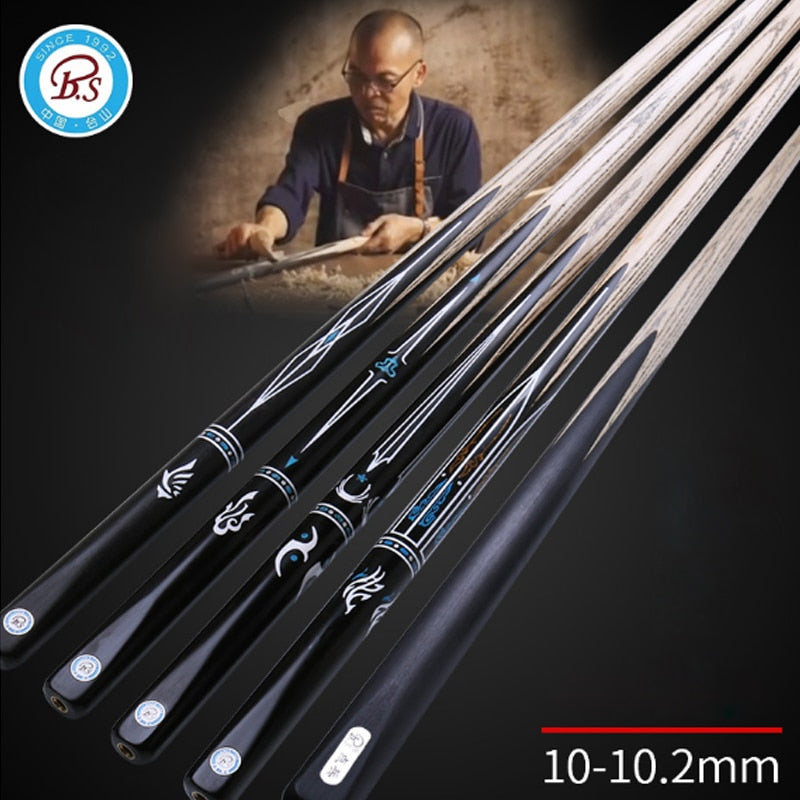
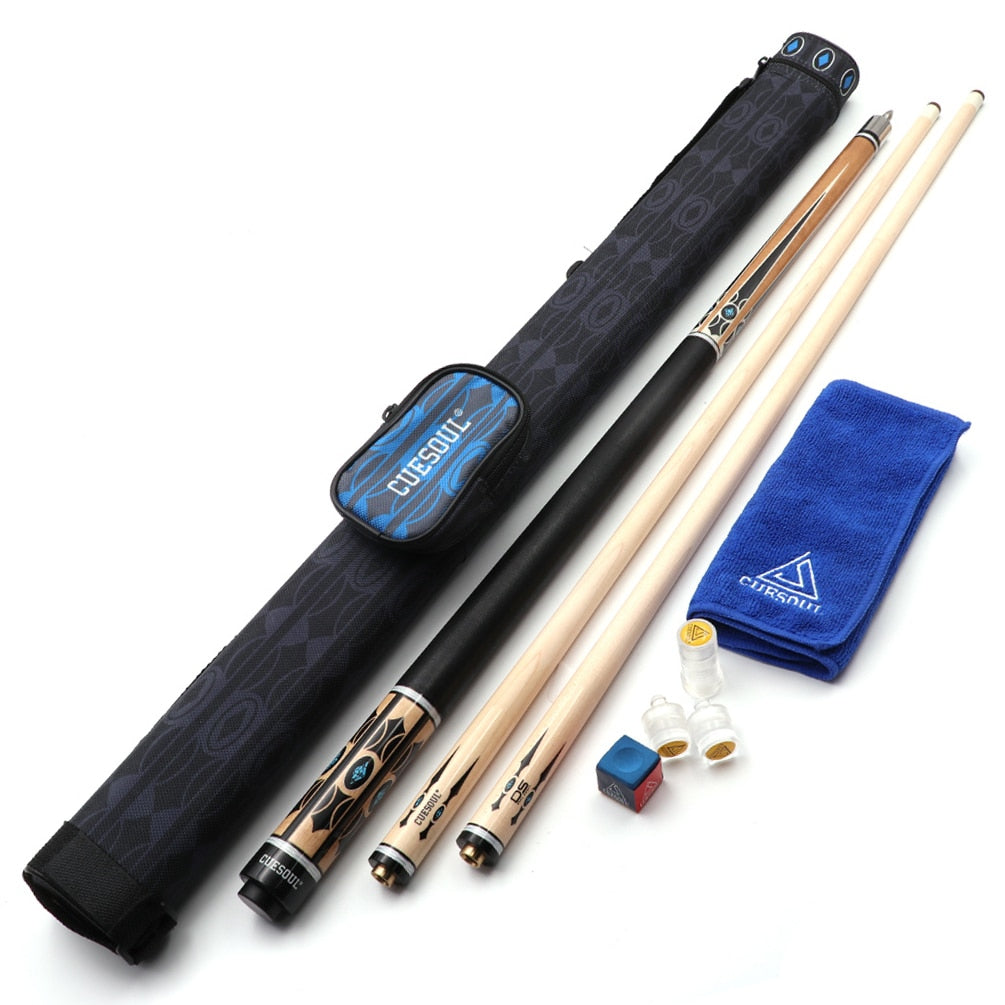
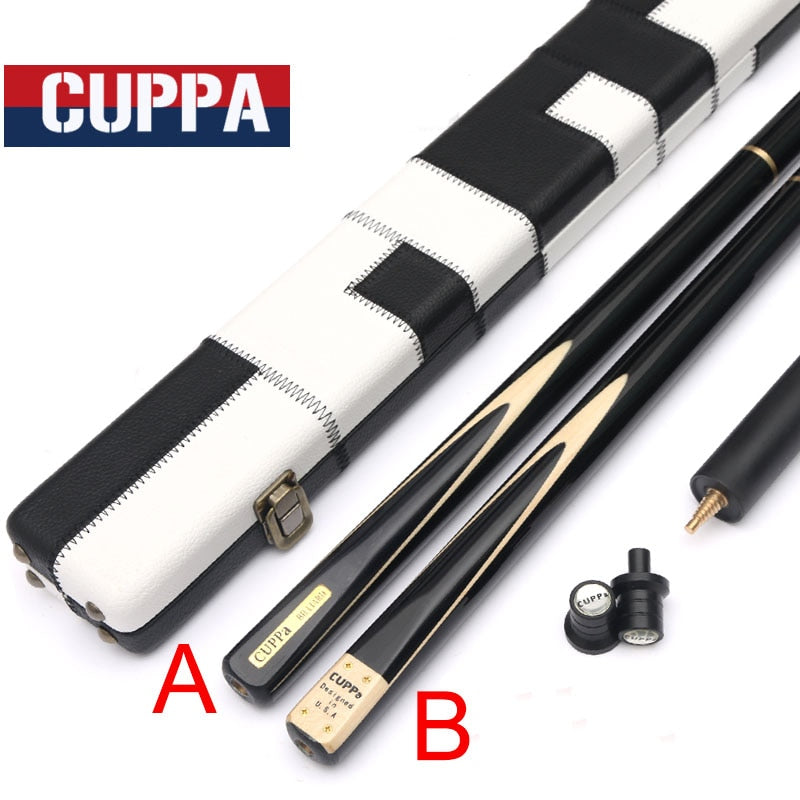
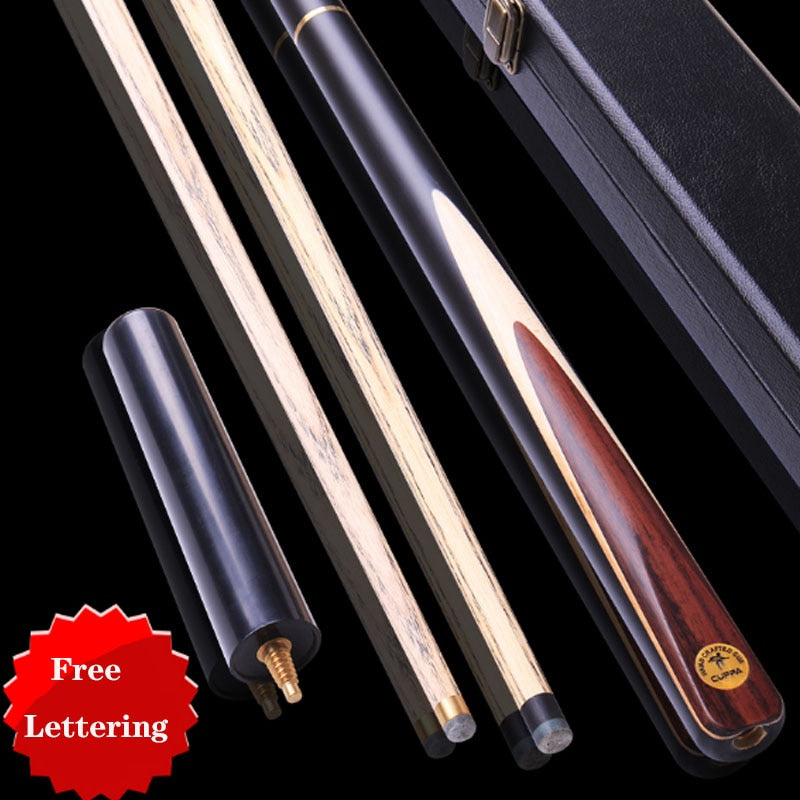
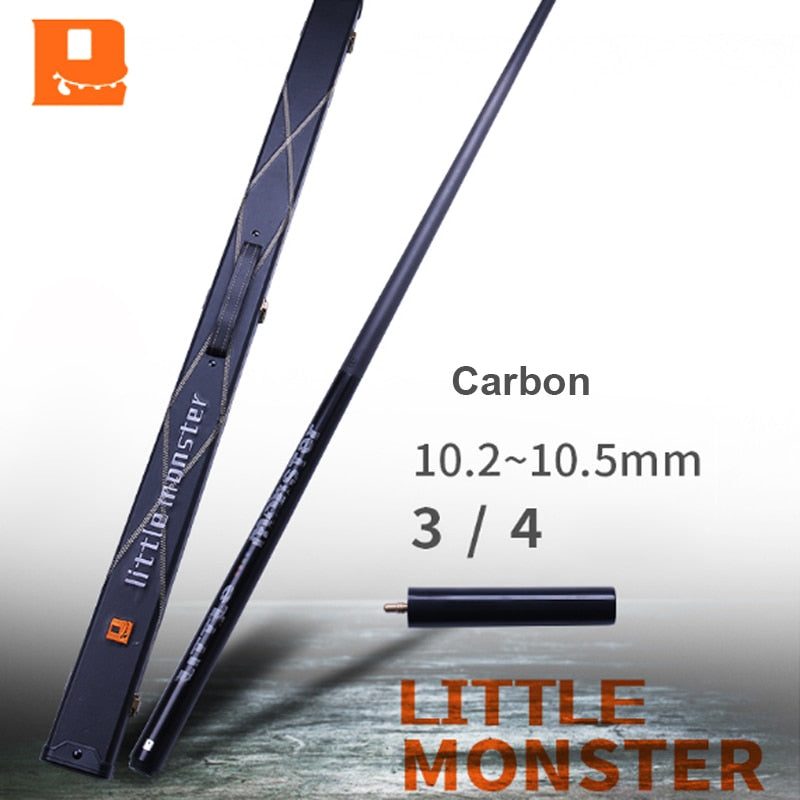
The one-piece hard-case set suits players who don't need to break the cue down and want maximum impact protection. The 3/4-jointed Cuppa sets are the practical all-rounders for travel and storage. The twin-shaft CUESOUL set suits anyone carrying a spare shaft or crossing over to pool. The carbon-shafted CUPPA set is the premium option here, and its case is built to match a cue worth genuinely looking after.
Cue-and-case sets vs buying a case alone
The vast majority of snooker cues sold online come with a case included, and that's not just marketing padding. A cue needs to travel from the workshop to your door without bending or chipping, so the maker builds a case into the shipping unit anyway — selling it as a "set" costs them little extra and gives you a correctly sized case at no extra decision-making cost.
What a bundled case usually gets right: correct fit for that specific cue, basic dust and knock protection, and straightforward value since you're not paying separately for something you'd need anyway. Where bundled cases fall short is usually in three areas — rigidity (soft tubes flex), closures and zips (often the first thing to wear out), and internal padding (thin foam rather than shaped dividers on the cheapest sets).
If you're buying your first cue, a bundled set is the sensible default. If you already own a cue you love, or you're carrying it on public transport and through car boots regularly, that's when seeking out a dedicated hard case, sized to your cue's exact length and joint style, earns its keep.
Setting realistic expectations
Most affordable cases — including all the bundled sets above — are imported and built to a price. That's fine: they do the core job of keeping your cue straight and protected for everyday club and home use. What you shouldn't expect at this level is the heavily padded, aluminium-framed luxury of a hand-stitched leather tube case. Zips can feel light and foam density varies between batches. Treat a budget case as reliable club-night protection rather than airline-proof gear, and it will serve you well for years. If you play competitively and travel a lot, or you've invested in a handmade or carbon cue, you may eventually want to upgrade the case while keeping the original as a spare.
Storage habits matter as much as the case itself
It's worth being honest here: the case matters, but how you store the cue matters just as much. Most warped cues weren't damaged in a bad case — they were left standing against a radiator, propped in a hot conservatory, or laid flat under a pile of other kit for weeks. A good case reduces risk; sensible storage removes most of it. Whatever case you end up with:
- Store it flat or hanging, never leaning at an angle for long periods.
- Keep it away from heat sources, direct sun and damp.
- Wipe the shaft down before it goes in, so grime doesn't build up inside the lining.
- Check the tip and ferrule aren't pressing hard against the case end.
Quick checklist before you buy
- Match the case to the cue type — one-piece, two-piece or 3/4 jointed.
- Choose hard if you travel, soft or semi-rigid if you stay local.
- Count your pieces — cues plus spare shafts — and buy enough slots.
- Check the fit — snug but not forced, with no rattle.
- Look at the lining and tip protection, not just the shell.
- Allow room for chalk, a glove and an extension.
- Check the closures — full-length zips or solid clasps, and a comfortable strap.
The bottom line
A cue case isn't where you should agonise over every pound, but it is where a little attention pays off. Get the fit right, pick the shell that suits how you play, size it to what you actually carry, and check the inside for proper padding rather than bare board. If you're buying a new cue, a matched set takes the guesswork out entirely — the case is already built to protect the cue inside it. Look after both, and your cue will repay you with years of true, consistent play.
Frequently asked questions
Do I need a hard case or is soft enough?
It depends on how the cue travels. If it goes in a car boot, on public transport, or gets handed around a club, a hard case is worth the extra bulk. If it only moves from a quiet room to a nearby table, a soft or semi-rigid case is perfectly adequate.
What's the difference between a one-piece and 3/4 case?
A one-piece case is a full-length tube of around 57–58 inches supporting the cue end to end, while a 3/4 case is shorter with separate compartments for the butt and shaft sections. Buying the wrong one means the cue either won't fit or rattles around loose.
Is the case that comes with a cue set actually any good?
Usually it's adequate rather than exceptional, and that's fine for most players. It's correctly sized to that specific cue and gives solid dust and knock protection, though rigidity, zips and padding depth vary between cheaper and pricier sets.
How do I know if a case fits my cue properly?
The cue should sit snugly with no sliding or rotation, but shouldn't need forcing in or out. Movement inside a case is what causes ferrule chips and tip damage over time, so fit matters more than any other single feature.
Do I need room for an extension and accessories?
If you use a telescopic extension, look for a case with a dedicated sleeve rather than jamming it beside the shaft, since a loose extension will scuff the finish. A separate pocket for chalk, a spare tip and a glove is also genuinely useful day to day.
Can a cue warp even inside a good case?
Yes — a case reduces risk but doesn't climate-control the cue. Keep it away from radiators, hot cars and direct sun, and store it flat or hanging rather than leaning against a wall under its own weight for weeks.
Should I buy a case separately or as part of a set?
For a first cue, a bundled set is the sensible default because the fit is guaranteed and you spend once. Consider a dedicated case only if you're upgrading a cue you plan to keep for years, or you travel with it regularly.
What ruins a case's zips and closures fastest?
Short, thin zips that you have to feed the cue through tend to fail first, along with straps glued rather than stitched to the body. Full-length, chunky zips or solid clasps, and reinforced seams at the ends, last considerably longer.