Cue-and-Case Sets vs Buying a Case Alone: What You Actually Get
· Mark O'Sullivan
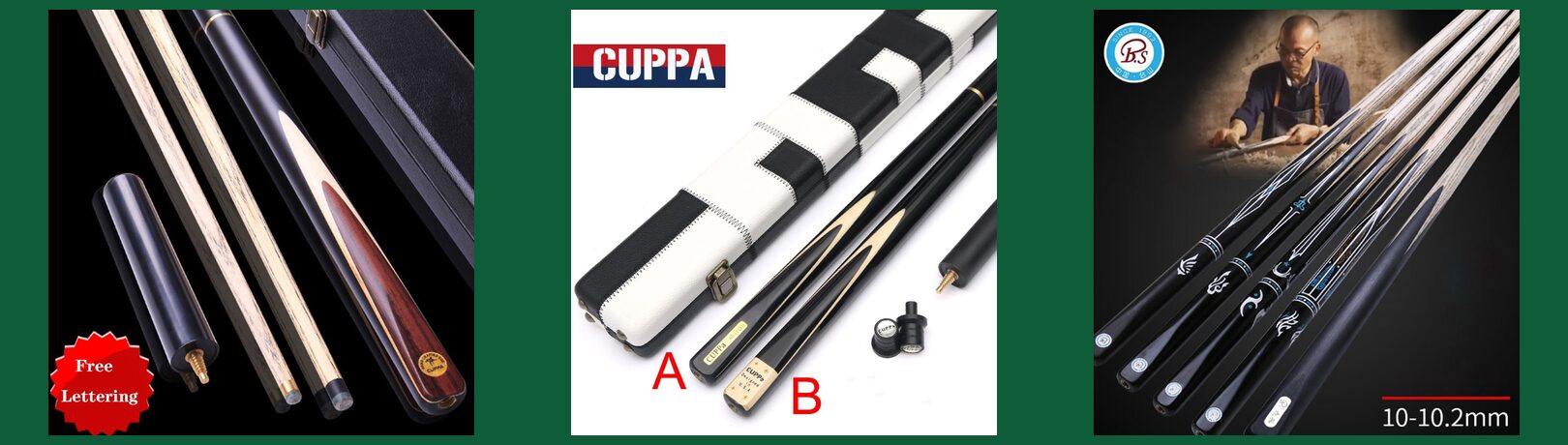
Here's something most beginners don't realise until the parcel arrives: the vast majority of snooker cues sold online come with a case included. That's convenient, but it also raises a fair question — is a bundled case any good, or are you just getting a flimsy afterthought to justify the word "set"? And if you already own a cue you love, is it worth hunting for a case on its own?
Having handled a lot of these bundles, my short answer is: the case in a set is usually adequate rather than exceptional, and that's perfectly fine for most players. The trick is knowing what to expect, and when a separate purchase actually makes sense.
Why so many cues come bundled with a case
It's simple economics. A cue needs to travel from the workshop to your door without bending or chipping, so the maker builds a case into the shipping unit anyway. Selling it as a "cue and case set" costs them very little extra and makes the listing look better value. Products like NEW Cuppa 3/4 Snooker Cues Stick 9.8mm 11.5mm Tip with Snooker Cue Case Set and Cuppa Handmade 3/4 Snooker Cue Case Set A/B Type Snooker Cues 9.8mm Bright Paint Cracking Prevention Maple Shaft China follow exactly this pattern.
That's genuinely useful. For a first cue, you get everything you need to store and carry it in one go, at one price. Just don't assume the included case matches the quality of a dedicated aluminium flight case — most bundled cases are soft or semi-hard tubes designed to protect during shipping and casual transport, not to survive being sat on by a bus.
What a bundled case usually gets right
- Correct fit. The biggest advantage of a set is that the case is sized to that cue. A 3/4-jointed cue's sections drop into the right slots without rattling around.
- Basic dust and knock protection. Enough to keep the shaft clean and shielded from everyday bumps.
- Value. You're not paying separately for something you'd otherwise need anyway.
For a jointed cue like CUPPA New Arrival Little Monster Carbon Billiard Snooker Cue Stick 10.2mm Tip with Snooker Cue Case Set, that snug, purpose-made fit is arguably worth more than a generic case bought blind online.
Where bundled cases fall short
The compromises show up in three areas. First, rigidity — soft tubes flex, and a cue can still bend if the case is stored leaning against a wall in a warm room. Second, closures and zips, which are often the first thing to wear out. Third, internal padding, which on cheaper sets can be thin foam rather than shaped dividers.
If you're carrying your cue on public transport or throwing it in a car boot regularly, a properly hard-shelled option matters more. A one-piece cue is especially vulnerable to bending, so a set built around a hard case — such as BS New Arrival One Piece Billiard Snooker Cue Stick 10.2mm Tip with Hard Snooker Cue Case Set — is worth the premium. The same logic applies to pool players eyeing a two-shaft set like CUESOUL 58" 19oz DS Maple Pool Cue Stick Set with 2 Shaft,13mm Tip Hard Cue Case 1x1(Cue Set and Cue Shaft only for your choice), where a hard case protects both shafts and the extra tip investment.
Set or separate? A quick comparison
Below is a rough guide to how a few catalog sets stack up on the case side of things. Treat the case type as an indication of build, not a guarantee of specifics.
How to read that
If you're buying your very first cue, a bundled set is the sensible default — the fit is right and you spend once. If you already own a cue, or you're upgrading to something you plan to keep for years, that's when a dedicated hard case (bought to match your cue's length and joint) earns its keep.
What actually protects your cue — case or habit?
It's worth being honest here: the case matters, but how you store the cue matters more. Most warped cues I've seen weren't damaged in a bad case — they were left standing against a radiator, propped in a hot conservatory, or laid flat under a pile of other kit. A good case reduces risk; sensible storage removes most of it.
Whatever case you end up with, follow the same basics:
- Store it flat and horizontal, or hung, never leaning at an angle for weeks.
- Keep it away from heat sources and damp.
- Wipe the shaft down before it goes in, so grime doesn't build up inside.
- Check the tip and ferrule aren't pressing hard against the case end.
My honest recommendation
For the great majority of players, the case that comes with your cue set is fine. It fits, it protects the cue in normal use, and it saves you money and decision fatigue. Buy the cue you want first; treat the bundled case as a genuine bonus rather than the deciding factor.
Only go out of your way for a heavier-duty case if you travel a lot, own a one-piece cue, or have invested in something you intend to play with for a decade. In that scenario, prioritise a listing that specifically mentions a hard case, confirm it matches your cue's length and joint style, and you'll rarely think about it again — which is exactly what a good case should let you do.
Keep in mind these are affordable, mostly imported products. They offer strong value, but set your expectations to "reliable everyday protection" rather than premium tour-grade flight case, and you'll be a happy buyer.