Cue Care Component by Component: Tip, Ferrule, Shaft and Butt
· Mark O'Sullivan
Most cue-care advice treats a snooker cue as one object. In practice it's four working parts — the tip, the ferrule, the shaft and the butt — and each one wears differently, fails differently and needs a different bit of attention. If you understand what's happening to each section, you stop wasting effort and start fixing the things that actually cost you frames.
Here's a component-by-component walkthrough, with honest notes on the affordable kit that helps. Most of what follows is inexpensive, largely imported gear — it does the job well, but set your expectations at 'reliable everyday tool', not 'heirloom'.
The tip: your only contact with the ball
The tip does all the actual work, so it degrades fastest. Two things ruin it: glazing (it goes shiny and hard and stops holding chalk) and mushrooming (it spreads wider than the ferrule and starts to peel).
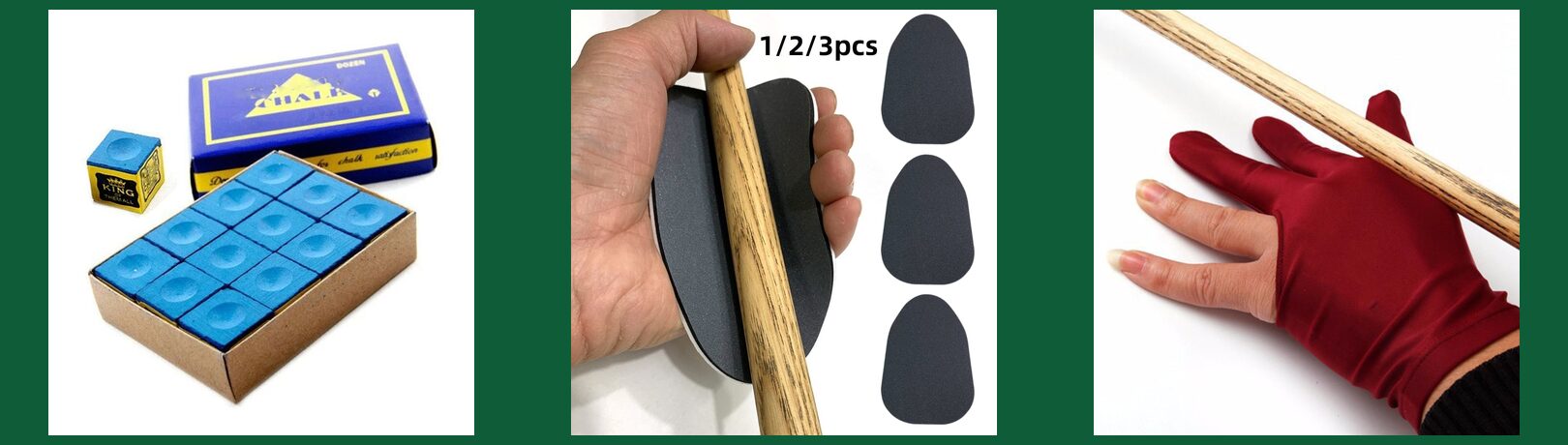
- Keep it chalked, not caked. A light, even coat before every shot is the goal. Fresh, well-pigmented chalk grips far better than a worn-down cube — a cheap multipack like 4pcs Cheap Billiards Snooker Cue Chalk Billiard No-slip Chalk Indoor Sport Accessories means you never play on a hollowed-out block.
- Maintain a domed profile. A tip should be roughly the curve of a five-pence piece so it grips the ball across a range of striking positions. Scuff it lightly to hold chalk; don't sand it flat.
- Know when to replace. When a tip glazes over, keeps miscuing or has worn down near the ferrule, it's done. For a genuine upgrade, a premium layered tip such as Japanese Original KAMUI Clear Cue Tips Billiard Pool Cue KAMUI Tip 14mm SS/S/M/H Snooker Tip Brown 11mm M/MH Billiard Accessory holds its shape and chalk beautifully. If you just need a fast, no-fuss fix on a house or spare cue, screw-on tips like 10PCs/set Screw On Cue Tips For Billiard Pool Cue Stick and Snooker Cue Replacement Parts Stick Repair Tool for Snooker 10mm Hot get you playing again in minutes.
The ferrule: the quiet weak point
The ferrule is the small collar between tip and shaft. It takes the impact shock and protects the wood beneath. It's easy to ignore until it cracks — usually because someone tried to jack up over a ball and struck downward hard, or because a mushroomed tip put sideways stress on it.
Care here is mostly about habits: keep the tip trimmed flush so it isn't overhanging, wipe chalk dust off the ferrule so it doesn't grind into the joint, and avoid heavy masse-style shots on a cue that isn't built for them. A hairline crack means a trip to a cue repairer — it's not a home job, and playing on it risks the shaft.
The shaft: speed, feel and the enemy called moisture
The shaft is where 'a good cue' lives or dies. You want it clean, smooth and, above all, straight. The two threats are grime and warping.
Keeping it clean and fast
Chalk dust, hand oils and table grime build into a sticky film that drags on your bridge hand and dulls the finish. Wipe the shaft down after every session with a clean, dry cloth. When it needs more, a dedicated tool such as 1/2/3pcs Professional Billiard Pool Cue Burnisher Cleaner Polisher Home Cleaning Snooker Pole Training Pool Ball Accessories lifts residue and burnishes the timber back to a slick, consistent glide. Work along the grain, gently, and stop as soon as it feels smooth — over-polishing an ash shaft can flatten its natural chatter.
Beating the sticky bridge
If your hand drags no matter how clean the shaft is, the culprit is usually your skin, not the wood. Humidity and sweat make the smoothest shaft feel tacky. A light Spandex Snooker Billiard Cue Glove Pool Left Hand Open Three Finger Accessory for Unisex Women and Men 4 Colors 1Pcs gives a consistent glide session to session and, as a bonus, keeps hand oils off the wood in the first place.
Preventing warps
Warping is heat and moisture doing their worst over time. Never leave a cue in a car boot, near a radiator or leaning at an angle for weeks. The single best habit is storing it vertically or flat in a case, away from temperature swings — and a simple wall or table rack like Billiards Cue Rack Bridge Head Cross Antlers Rod Holder Snooker Pool Plastic Staghorn Shape 2 Color keeps it upright and off the floor between frames.
The butt and joint: grip, balance and threads
The butt gets the least attention and needs the least, but a few things matter. Keep the grip area clean so it doesn't turn slick with sweat. On a jointed cue, keep the brass threads and faces free of chalk dust — a quick wipe before assembly stops grit wearing the joint and keeps the two halves meeting flush. Hand-tighten only; forcing a joint strips it over time. If your cue takes an extension, check the fit occasionally rather than discovering a loose thread mid-shot.
Matching the kit to the job
Here's how the core products line up against the part of the cue they look after and how often you'll reach for them.
A realistic maintenance rhythm
- Every shot: a light, even chalk.
- Every session: wipe the shaft dry; store it properly in a case or rack.
- Monthly: clean and burnish the shaft; check the tip's dome and the ferrule for cracks.
- As needed: re-tip when it glazes or wears down; wipe joint threads before every assembly.
The bottom line
You don't need an expensive kit to keep a cue playing well — you need to know which part is asking for attention. Chalk and a cloth cover ninety per cent of it. A cleaner, a glove, a rack and the occasional new tip cover almost all the rest. Treat the cue as four parts, give each the small thing it needs, and a modest cue will play straight, smooth and reliable for years.