How Many Cues, How Much Kit? Choosing a Snooker Cue Case by Capacity
· Mark O'Sullivan
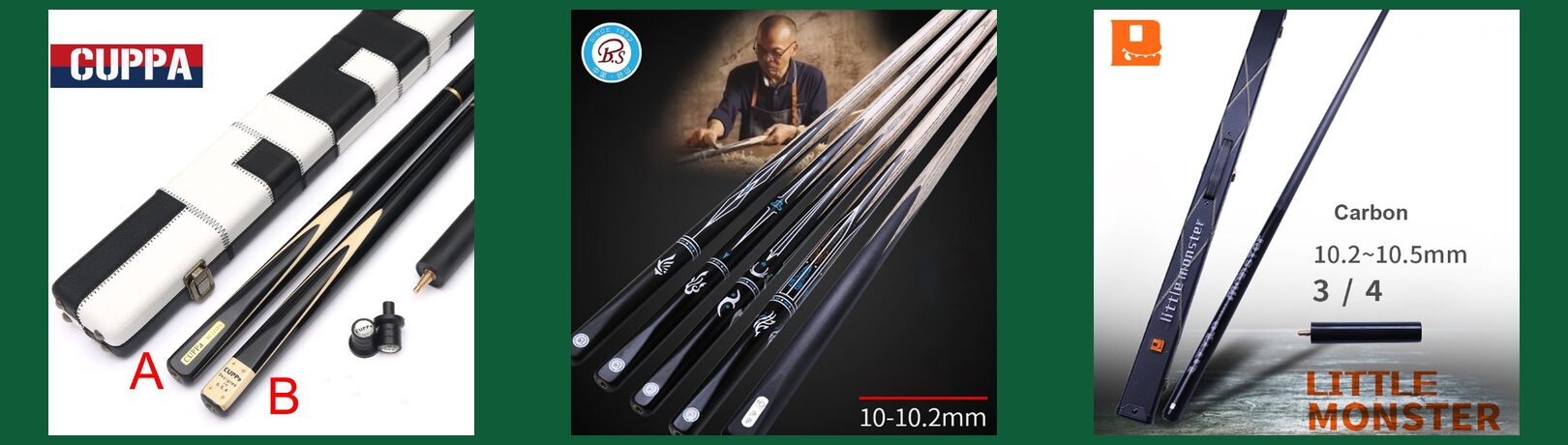
Most cue case advice focuses on materials and padding — and rightly so. But there's a quieter mistake that trips up more players than warping ever does: buying a case that simply doesn't fit what you carry. You end up wedging a spare shaft alongside your butt, forcing an extension into a pocket that won't close, or rattling loose chalk around a compartment it was never meant to hold. A case that's the wrong shape or capacity protects your cue about as well as no case at all.
So before you compare zips and foam, work out honestly what your case needs to swallow. Here's how to size one properly.
Start with a headcount: how many cues (and shafts)?
The single biggest capacity decision is how many pieces you own. A one-piece player carrying a single 57-inch cue needs something totally different from a club regular with a 3/4-jointed match cue, a spare shaft and a break cue.
- One cue, one piece: you want a full-length tube or box that supports the cue end to end. Sets like the BS New Arrival One Piece Billiard Snooker Cue Stick 10.2mm Tip with Hard Snooker Cue Case Set pair the cue with a hard case built to its exact length, which removes the guesswork.
- One 3/4-jointed cue: the cue splits into two sections, so a shorter case works — but check it holds both the butt and the longer shaft section with room to spare. The Cuppa Handmade 3/4 Snooker Cue Case Set A/B Type Snooker Cues 9.8mm Bright Paint Cracking Prevention Maple Shaft China is a typical cue-and-case pairing sized for exactly this.
- Cue plus spare shaft or a second cue: now you need a case rated for two or more slots. Don't try to double up in a single-cue tube; shafts knocking together is how tips and joints get chipped.
Don't forget the awkward extras
The stuff that never quite fits is usually the stuff you use every session. Two culprits stand out.
The extension
A telescopic extension like the Snooker Cue Extender Adjustable Length Telescopic Cue Extension is brilliant for long-table shots, but it needs its own home. Some cases include a dedicated sleeve; others expect you to jam it in beside the butt. If you play on a full-size table regularly, treat extension storage as a genuine requirement, not an afterthought.
Chalk, tips and the small bits
A zipped or lidded pocket keeps chalk from crumbling over everything else. If your case has one, use it for a couple of cubes of 4pcs Cheap Billiards Snooker Cue Chalk Billiard No-slip Chalk Indoor Sport Accessories, spare tips and a mini toolkit. If it doesn't, factor that in — loose chalk dust migrating onto your ferrule and shaft is a nuisance you'll regret.
Match the case to the cue, not the other way round
Premium cues deserve premium protection, and the balance shifts as value goes up. A carbon-shaft cue such as the CUPPA New Arrival Little Monster Carbon Billiard Snooker Cue Stick 10.2mm Tip with Snooker Cue Case Set is a bigger investment, so a snug, well-supported case is non-negotiable. Likewise, a handmade cue with an ebony handle and an included extension — like the Handmade Cuppa 3/4 Snooker Cues Sticks 9.8mm Tips With Extension Ebony Wood Handle China Anti Cracking Lacquer Craft — comes with more parts to house, so the bundled case is specced to hold the lot. Buying the cue and case together sidesteps the fit problem entirely, which is why I nudge most beginners towards a set.
Be realistic about what these imported sets are: honest, good-value kit rather than boutique leather goods. The cases do the core job — support, separation and dust protection — without the price tag of a bespoke build.
Quick capacity comparison
A rough guide to what different cue-and-case sets are built to carry, based on how they're configured:
A simple sizing checklist
- Count your pieces — cues plus spare shafts — and buy a case with at least that many slots.
- Measure your longest section and leave a little clearance; a cue shouldn't bottom out hard against the case end.
- Check the extension fits if you use one, ideally in its own sleeve.
- Insist on a closed pocket for chalk so dust stays contained.
- Prioritise a snug fit over spare room — a cue that slides around inside a roomy case is more at risk than one held firmly.
The bottom line
The best cue case isn't the biggest or the flashiest — it's the one that holds everything you actually carry, snugly and with somewhere sensible for the chalk. Take two minutes to count your pieces and measure your longest section before you buy, and you'll dodge the most common cue-case regret. If you're kitting out from scratch, a matched cue-and-case set takes the fit worry off your plate and lets you get straight to the table.