Cue Tips by Playing Style: Matching the Right Tip to How You Actually Play
· Mark O'Sullivan
Ask three players which cue tip is best and you'll get four answers. That's because there isn't a single "best" tip — there's a best tip for you, given the game you play, the cue you own and how much you're willing to fuss over maintenance. The tip is the only part of the cue that touches the ball, so getting it right matters more than almost any other upgrade. This guide walks through the main types and helps you match one to your actual style of play.
Why the tip does more work than you think
Every bit of spin, control and feel travels through a piece of leather smaller than a five-pence coin. A good tip holds chalk, compresses predictably and gives you consistent feedback shot after shot. A poor one glazes over, mushrooms at the edges or plays differently depending on how hard you strike. If your cue ball is doing unpredictable things despite a clean action, the tip (or your chalking) is usually the first suspect — and a good 4pcs Cheap Billiards Snooker Cue Chalk Billiard No-slip Chalk Indoor Sport Accessories pairing is part of the equation.
The main types of cue tip
Screw-on tips
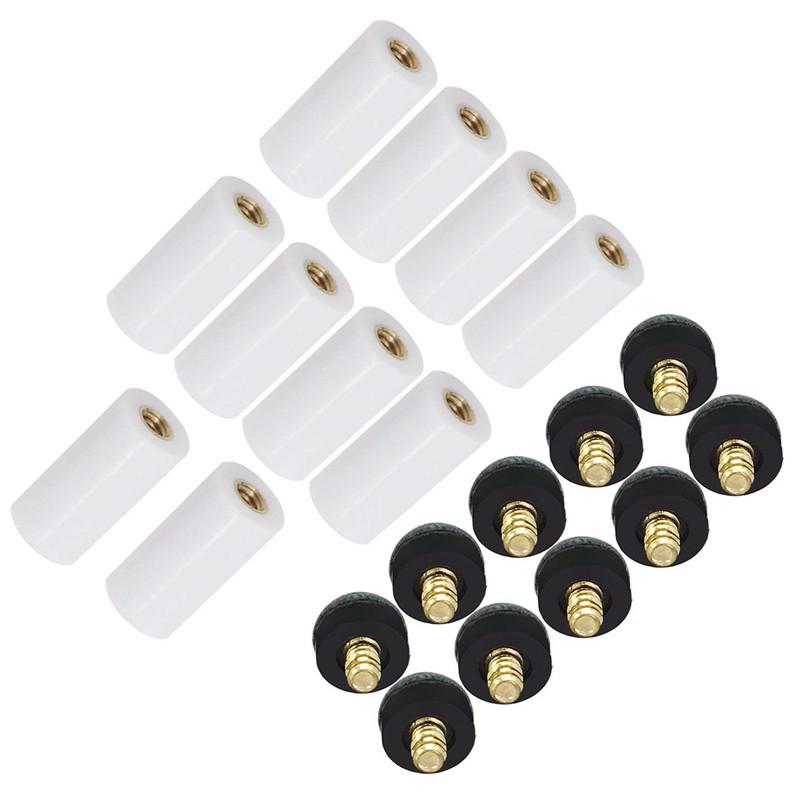
These thread onto a metal ferrule and require no glue, no clamping and no drying time. They're the most beginner-friendly option and ideal for cheap house cues or a spare you keep in the shed. A pack like the 10PCs/set Screw On Cue Tips For Billiard Pool Cue Stick and Snooker Cue Replacement Parts Stick Repair Tool for Snooker 10mm Hot gets you playing again in seconds, and the 5PCs 13mm Screw On Cue Tips For Billiard Pool Cue Stick and Snooker Cue Replacement Parts Stick Repair Tool Sports Entertainmen covers wider pool ferrules. The trade-off is honest: screw-on tips never feel as connected to the shaft as a glued tip, and the metal ferrule dulls the feedback slightly.
Glue-on single-layer tips
The traditional choice, and still the standard for serious snooker. A single piece of pressed leather is glued directly to the ferrule, giving a clean, direct hit. They're cheap in bulk — a bag such as the gives you plenty of practice at re-tipping — but they demand more work: you'll need to glue, clamp, trim and shape each one. Quality varies between individual tips in budget packs, so expect to sort through and pick the denser ones.
Layered tips
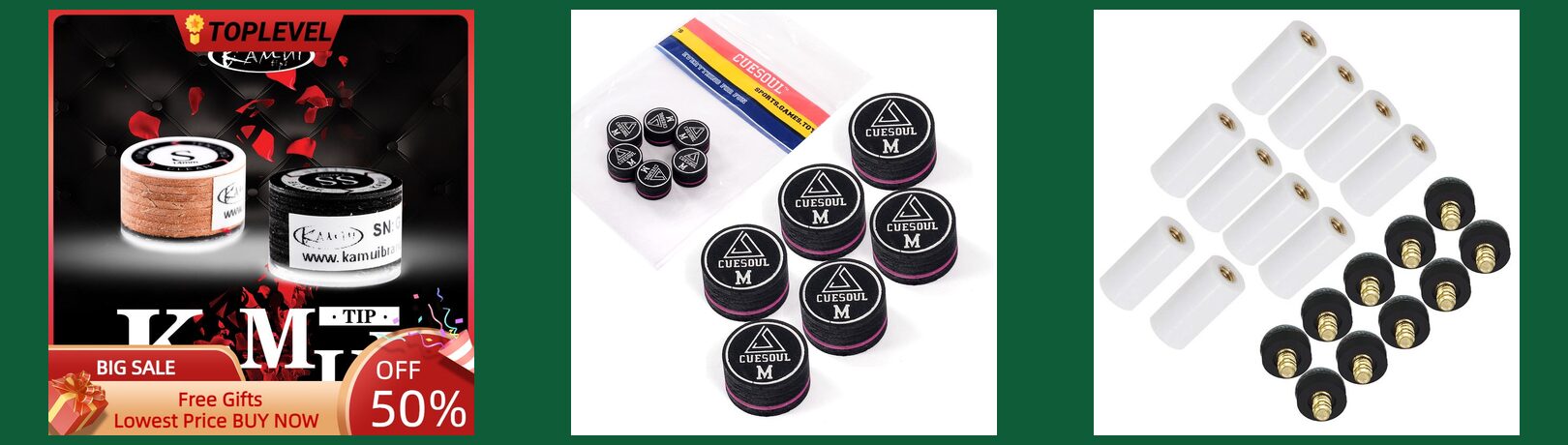
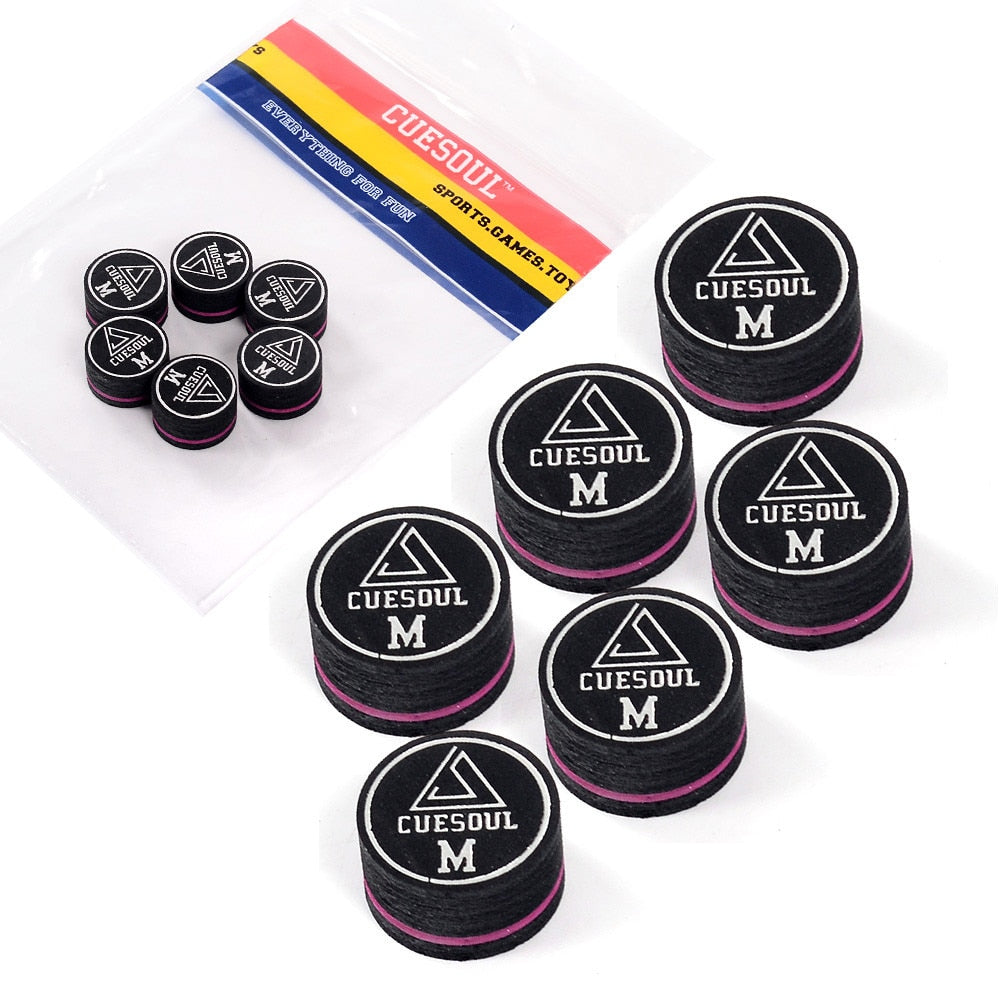
Layered tips bond several thin sheets of leather together, which resists mushrooming and holds its shape far longer than a cheap single-layer. The CUESOUL 6pcs/set 14MM Baked Pig Suede Billiard Snooker Cue Tip & Pool Cue Tip is a sensible mid-range option for pool players who want consistency without paying premium money. At the top end, the Japanese Original KAMUI Clear Cue Tips Billiard Pool Cue KAMUI Tip 14mm SS/S/M/H Snooker Tip Brown 11mm M/MH Billiard Accessory is a genuine step up in grip and feel — the sort of tip that rewards a player who's already fixed their technique.
Comparing the options
Here's a quick side-by-side of the tips covered above. Prices and quality skew toward affordable, mostly imported stock, so set expectations accordingly — the cheaper packs are for practice and house cues, not tournament play.

How hardness ties to your game
Hardness is the single biggest feel decision after type. As a rough guide:
- Soft tips grip the ball longer and generate spin easily, but wear faster and need reshaping more often. Good for players who love screw and swerve.
- Medium tips are the all-rounder most players should start with — enough grip for control, enough durability to last.
- Hard tips hold shape brilliantly and suit power players, but demand cleaner striking; miscue on a hard tip and it'll punish you.
Snooker traditionally leans harder than American pool, largely because of the smaller tip diameter and the precision the game demands.
Matching a tip to your style
The casual home player
If you knock balls about at home or in the pub, don't overthink it. A screw-on set keeps a house cue playable and costs pennies. Spend the difference you save on decent chalk instead — it'll make more difference than any tip upgrade at this level.
The improving club player
Once your action is repeatable, a layered tip pays off. A medium layered tip on a properly maintained shaft gives you consistent feedback, which is exactly what you need to diagnose whether a missed positional shot was you or the equipment. This is the sweet spot for most readers.
The keen player chasing feel
If you already play regularly and know your preferred hardness, a premium tip is a justified indulgence. You'll notice the difference in how it holds chalk and how cleanly it releases the ball — but only because your technique is good enough to feel it.
A word on fitting
Screw-on tips are foolproof. Glue-on and layered tips need patience: a flat, clean ferrule, a thin even layer of glue, firm clamping and careful shaping to match the shaft's dome. If you're new to it, buy a bulk pack and practise on a spare cue before touching your good one. A botched fit will play worse than a cheap tip fitted correctly.
The bottom line
Start with your game, not the marketing. Casual players get almost everything they need from a cheap screw-on and good chalk. Improving players should move to a medium layered tip. Only when your technique is genuinely consistent will a premium tip earn its keep. Match the tip to how you actually play today, and you'll get more from it than chasing whatever the pros are using.