Cue Tips Decoded: Screw-On, Glue-On, Suede and Kamui — What Each Type Actually Does
· Mark O'Sullivan
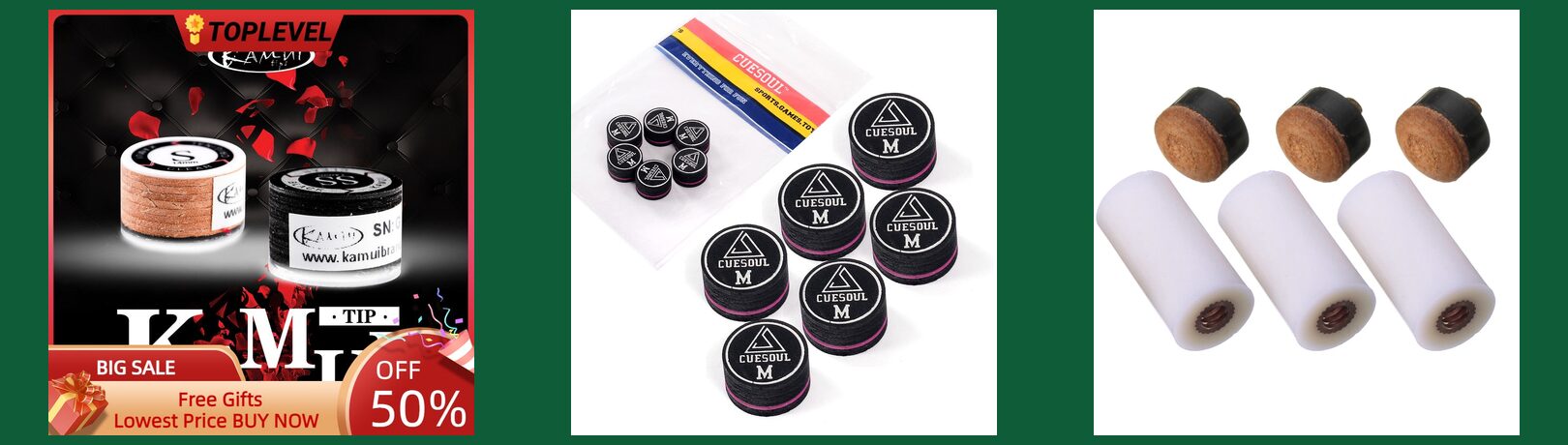
The tip is the only part of your cue that ever touches the ball, yet it's the component most players think about least. A worn, glazed or badly fitted tip will quietly rob you of spin, feel and confidence — no matter how good the shaft above it is. The good news is that a tip is also the cheapest, fastest upgrade you can make. The tricky part is that "cue tip" covers everything from a 20p screw-on to a premium layered pigskin tip, and they don't play the same.
Here's a straight-talking guide to the main tip types, what each is genuinely good for, and how to choose one that suits your cue and the way you play.
The four tip types you'll actually meet
Ignore the marketing and there are really four categories worth knowing about.
Screw-on tips
These thread directly into a matching ferrule with no glue required. They're the definition of convenient — you unscrew the old one and wind the new one in — which makes them ideal for house cues, kids' cues and casual pool sets where quick swaps matter more than fine feel. A set like the 5PCs 13mm Screw On Cue Tips For Billiard Pool Cue Stick and Snooker Cue Replacement Parts Stick Repair Tool Sports Entertainmen or the larger-value 10PCs/set Screw On Cue Tips For Billiard Pool Cue Stick and Snooker Cue Replacement Parts Stick Repair Tool for Snooker 10mm Hot keeps a spare in the case for pennies. The trade-off: only works with screw-fit ferrules, and the feel is firmer and less refined than a bonded tip.
Glue-on tips
The standard for most snooker and pool cues. You sand the ferrule flat, glue the tip on, then trim and shape it to the diameter of your shaft. It's a little more effort but gives a solid, consistent contact and works on virtually any cue. A bulk pack such as the is the sensible choice if you re-tip often or maintain several cues — you can afford to experiment without wincing.
Baked suede / pressed leather tips
A step up in feel. Pressed and baked leather tips hold chalk well and offer a bit more grip for spin, while staying affordable. The CUESOUL 6pcs/set 14MM Baked Pig Suede Billiard Snooker Cue Tip & Pool Cue Tip set sits in this bracket — a reasonable middle ground for club pool players who want better bite than a basic glue-on without paying premium prices. Note the 14mm size suits pool cues rather than a slim snooker shaft.
Layered premium tips
The top tier. Layered tips are built from bonded leather laminations, which keeps the shape stable and the response predictable as the tip wears. The Japanese Original KAMUI Clear Cue Tips Billiard Pool Cue KAMUI Tip 14mm SS/S/M/H Snooker Tip Brown 11mm M/MH Billiard Accessory range is the benchmark here, offered in snooker (11mm) and pool (14mm) diameters and in several hardnesses. If you're serious about your game and want a tip that holds its dome and grips chalk shot after shot, this is where the money goes.
Compare the options at a glance
Match the tip to how much fuss you want, and how much feel you're after.
Soft, medium or hard?
Within most ranges you'll see hardness grades. A quick rule of thumb:
- Soft: grips chalk and grabs the ball for spin, but compresses faster and needs more frequent reshaping.
- Medium: the all-rounder most players are happiest with — decent grip, decent lifespan.
- Hard: lasts longest and gives a crisper, more direct hit, favoured by many snooker players who prize consistency and a lower deflection feel.
If you're unsure, start medium. It's the least likely to annoy you while you work out your preferences.
Getting the diameter right
This is where people go wrong. A snooker shaft typically wants a tip around 9.5–11mm; pool cues run larger, usually 12–14mm. Fitting a 14mm tip to a slim snooker shaft means trimming away half the leather, and a tip that's too small for the ferrule leaves an overhang that mushrooms and splits. Always buy close to your shaft diameter and shape down to it, not up.
The tip is only half the job
A brilliant tip still miscues if it can't hold chalk. Fresh, well-applied chalk matters as much as the leather underneath it, so pair any new tip with a decent cube — an inexpensive multipack like the 4pcs Cheap Billiards Snooker Cue Chalk Billiard No-slip Chalk Indoor Sport Accessories keeps one in your case and one at the table. A new tip usually needs lightly roughing and "chalking in" over the first few frames before it settles and grips reliably.
Setting honest expectations
Most of the tips here are affordable, imported products, and quality can vary within a batch — it's the nature of buying budget leather. That's genuinely fine for house cues, spares and casual play, where a screw-on or bulk glue-on does exactly what's needed. If you play regularly and want dependable spin and feel, spend up to a layered tip and fit it carefully (or have it fitted). The jump in consistency is the single most noticeable upgrade a serious tip makes.
So which should you choose?
Keep it simple:
- Casual or house cue: screw-on tips for hassle-free swaps.
- Regular club player, own cue: a quality glue-on or pressed suede in medium.
- Serious about spin and consistency: a layered premium tip in your exact diameter and preferred hardness.
Whatever you pick, fit it square, shape it to a smooth dome, chalk it properly, and give it a few frames to bed in. Do that, and even a modest tip will reward you with cleaner contact and more confidence on the shots that matter.