Snooker & Pool Cue Tips: Which One Actually Suits Your Cue and Your Game
· Mark O'Sullivan
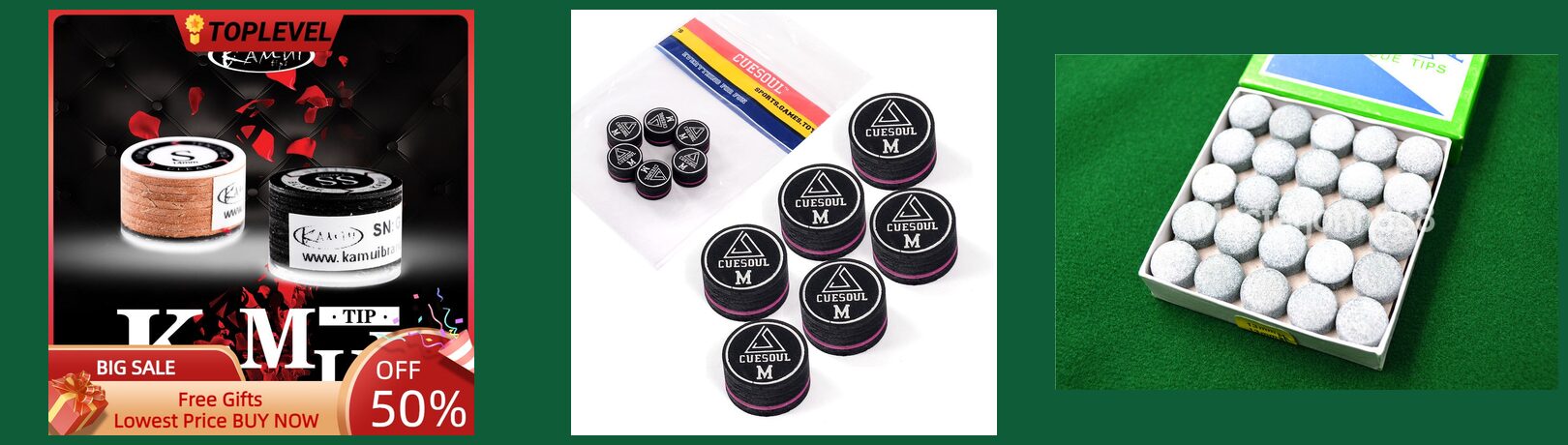
The tip is the only part of your cue that ever touches the ball, yet it's the part most players ignore until it lets them down mid-frame. Get it right and your cue feels alive — you can screw back, hold, and side with confidence. Get it wrong and you'll chase miscues you'll wrongly blame on your technique.
This guide breaks down what actually matters when choosing a tip for snooker or pool: hardness, diameter, construction and fitting method. It's written to help you make a confident choice, not to sell you the priciest option going. Most of the tips here are affordable, imported products, so set your expectations accordingly — but a well-chosen budget tip, properly fitted and looked after, will outperform an expensive one that's abused.
Hardness: the single biggest feel decision
Tip hardness governs how the tip grips and compresses on contact. As a rough rule:
- Soft tips compress more, hold chalk well and generate spin easily — but they flatten faster and need more frequent reshaping.
- Medium tips are the sensible all-rounder for most club players, balancing feel and durability.
- Hard tips hold their shape longer, transmit a crisper hit and suit power potting, but they demand disciplined chalking to avoid miscues.
Snooker players traditionally lean towards medium to hard, because the smaller ball and precise cue-ball control reward a consistent, low-deflection strike. Pool players often prefer medium for the extra bite when applying spin.
Diameter: match the tip to your cue, not the trend
Fit the tip to your ferrule. Snooker shafts are typically 9.5–10.5mm, so a snooker-specific tip in that range is what you want. Pool cues usually run 12–13mm, and American pool shafts wider still. Forcing an oversized tip onto a narrow ferrule and filing it down weakens the edge and looks scruffy.
If you're buying a batch to practise re-tipping, choose the diameter closest to your ferrule so you're doing minimal trimming. The T 50pcs Glue-on Pool Billiards Snooker Cue Tips 13mm Free Shipping Wholesales set, for example, is a cheap way to practise fitting 13mm pool tips without fretting over ruining an expensive one.
Layered vs single-layer
Single-layer (natural) tips are one piece of compressed pigskin. They're inexpensive and, when good quality, play beautifully — but consistency can vary from tip to tip because they're a natural product. The CUESOUL 6pcs/set 14MM Baked Pig Suede Billiard Snooker Cue Tip & Pool Cue Tip baked suede tips are a solid example of a traditional single-layer option in a larger pool diameter.
Layered tips are made from thin bonded sheets, which resists mushrooming and holds a domed shape longer. The Japanese Original KAMUI Clear Cue Tips Billiard Pool Cue KAMUI Tip 14mm SS/S/M/H Snooker Tip Brown 11mm M/MH Billiard Accessory range is the best-known layered option here, available in both a wider pool tip and an 11mm snooker tip across several hardness grades — handy if you want to dial in feel precisely.
Glue-on vs screw-on tips
Glue-on tips give the best hit because the tip bonds directly to the ferrule with no hardware in between. They're the standard for any serious cue, but they require fitting — either yourself or by a cue technician.
Screw-on tips trade a little feel for pure convenience: unscrew the old one, screw in the new one, keep playing. They're ideal for house cues, kids' cues and casual games where nobody wants to wait for glue to cure. The 5PCs 13mm Screw On Cue Tips For Billiard Pool Cue Stick and Snooker Cue Replacement Parts Stick Repair Tool Sports Entertainmen pack covers pool-width cues, while the 10PCs/set Screw On Cue Tips For Billiard Pool Cue Stick and Snooker Cue Replacement Parts Stick Repair Tool for Snooker 10mm Hot set suits narrower snooker-style shafts. Only buy these if your cue already has a threaded ferrule — you can't retrofit them to a standard cue.
Quick comparison
Don't forget the chalk
Even the finest tip will miscue with poor or worn chalk. A grippy tip and a well-chalked surface work as a system. If you're upgrading your tip, refresh your chalk at the same time — a multipack like the 4pcs Cheap Billiards Snooker Cue Chalk Billiard No-slip Chalk Indoor Sport Accessories costs next to nothing and means you always have a fresh cube to hand. Chalk the whole dome lightly before every shot with side, not just the centre.
How to choose, in one paragraph
Start with your cue's ferrule diameter and buy a tip that fits it. Pick medium hardness unless you already know you prefer softer feel or a firmer hit. Go single-layer if you want tradition and value, layered if you want shape retention and repeatable feel. Choose glue-on for a proper playing cue and screw-on only if your cue is already threaded.
Final word
A tip is a small, cheap component with a huge influence on how your cue performs. Because most of these are affordable imports, the smart move is to buy a couple of options, fit them carefully, and learn what suits your stroke — then stick with it. Look after the tip you choose, chalk properly, and it'll repay you with clean, confident contact frame after frame.