Hard or Soft, One-Piece or Jointed? A Smarter Snooker Cue Case Guide
· Mark O'Sullivan
Most players spend weeks choosing a cue and about thirty seconds thinking about the case. That's backwards. A cue is a slim length of timber that reacts to knocks, heat and humidity — and the case is the one thing standing between it and a warped shaft or a cracked joint. The good news is you don't need to spend a fortune. The trick is matching the right kind of case to your cue, then knowing which protective features genuinely earn their keep.
This guide is about making a smart match rather than simply buying the fanciest tube on the shelf. Let's start with the single most important question.
First, match the case to your cue's build
Before anything else, work out whether your cue is a one-piece, a two-piece, or a 3/4 jointed cue. The case format follows from that — get this wrong and you'll be forcing an expensive cue into a case that doesn't hold it properly.
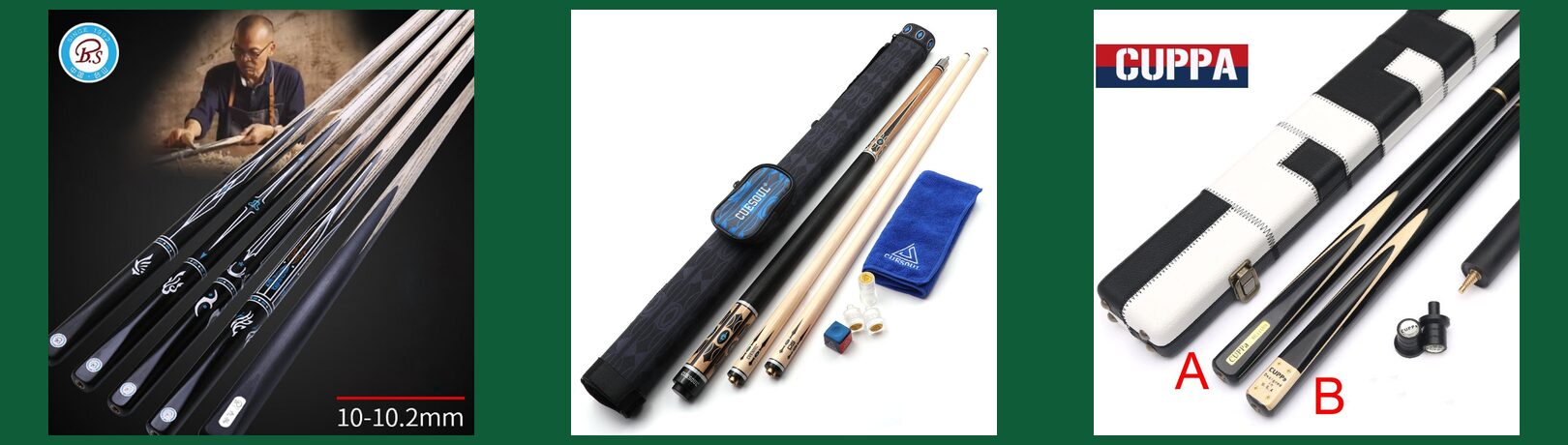
- One-piece cues need a full-length tube or slip case, usually around 57–58 inches. A one-piece set like the BS New Arrival One Piece Billiard Snooker Cue Stick 10.2mm Tip with Hard Snooker Cue Case Set arrives with a hard case cut to length, which saves you the hassle of trying to source a long case separately.
- 3/4 jointed cues split roughly three-quarters of the way up and need a shorter case with a compartment for the butt, the shaft, and often an extension. Cues sold as case sets — the Cuppa Handmade 3/4 Snooker Cue Case Set A/B Type Snooker Cues 9.8mm Bright Paint Cracking Prevention Maple Shaft China is a typical example — come with a case shaped for exactly that layout.
- Two-piece pool-style cues break at the centre and suit a compact half-length case, like the one bundled with the CUESOUL 58" 19oz DS Maple Pool Cue Stick Set with 2 Shaft,13mm Tip Hard Cue Case 1x1(Cue Set and Cue Shaft only for your choice).
Hard case or soft case?
This is the real debate. Both have a place.
Hard cases
A rigid hard case — moulded plastic, aluminium or a stiffened box shape — is what I'd recommend if you travel, take the bus, or bung your cue in a car boot. It resists crushing, protects against knocks, and keeps the shaft dead straight. The trade-off is weight and bulk. If your cue matters to you, a hard case is cheap insurance.
Soft cases
Soft tube and slip cases are lighter, slimmer and easier to carry to the local club. They guard against scratches and minor dings but offer little defence against being trodden on or dropped hard. Perfectly fine if the cue never leaves a controlled environment — less so for regular transport.
My honest steer: if in doubt, go hard. The extra protection outweighs the small penalty in weight for nearly everyone.
The protective features that actually matter
Marketing loves to list features. These are the ones worth checking:
- Internal padding and lining. Soft flocked or foam lining stops the finish rubbing and cushions vibration. Run your hand inside — bare hard plastic against a cue is asking for scuffs.
- Individual tube channels. On jointed and two-piece cases, separate compartments stop the shaft and butt clacking together in transit. That contact is what chips joints and dents the delicate tip end.
- A secure closure. A zip that runs the full length, or solid clasps, matter more than they sound. A case that can spring open is worse than no case at all.
- Tip-end protection. The ferrule and tip take the most damage. Look for padding or a recessed base so the tip never rests directly against a hard surface.
- A little extra room. A pocket or spare channel for chalk, a glove or an extension keeps everything together. Speaking of which, if you use a Snooker Cue Extender Adjustable Length Telescopic Cue Extension, check the case has space for it — many 3/4 cases are designed with this in mind.
Honest expectations at the budget end
Most cases in this price bracket are imported and sold as part of a cue set rather than as standalone premium luggage. That's fine — they do the core job of protecting your cue well enough for club and home use. What you shouldn't expect is aircraft-grade shells, leather stitching or lifetime waterproofing. Zips can feel light, and foam density varies. Treat the bundled case as solid everyday protection, and if you develop a serious cue, consider upgrading the case later while keeping the original as a spare.
A quick comparison of case-included sets
Because the best value often comes from buying a cue that already ships with a fitting case, here's how a few catalogue options stack up by format and build.
The Handmade Cuppa 3/4 Snooker Cues 9.8mm Tip With Black Snooker Cue Case Set Padauk Handle China and the carbon-shaft CUPPA New Arrival Little Monster Carbon Billiard Snooker Cue Stick 10.2mm Tip with Snooker Cue Case Set both arrive with cases matched to their jointed layout, which removes the guesswork of sizing a case yourself.
The bottom line
A quality cue case isn't about looking the part — it's about format, protection and closure. Match the case type to whether your cue is one-piece, two-piece or 3/4 jointed, favour a hard shell if you travel, and check for real internal padding and separate channels. Do that, and even an affordable bundled case will keep your cue straight, chip-free and ready to play for years.