Snooker, Pool or Carom? Choosing the Right Cue for the Game You Actually Play
Published · Updated · Mark O'Sullivan

Walk into any cue sports shop and you'll see rows of sticks that look broadly similar. But snooker, pool (or 'American') and carom cues are built for three genuinely different games, and using the wrong one holds your game back more than most players realise. A snooker cue on a nine-ball table feels whippy and imprecise; a chunky pool cue on a snooker table struggles to control a delicate safety. Before you spend, it pays to understand what actually separates them.
This guide breaks down the three main types by tip diameter, taper, length and feel — then points you towards honest, affordable options for each. Most of these are imported cues that offer strong value rather than boutique hand-spliced craftsmanship, so I'll set expectations along the way.
Why cues aren't interchangeable
The differences come down to the balls, the table and the shots each game demands. Three things matter most:
- Tip diameter: Snooker balls are small (around 52.5mm) and demand pinpoint contact, so tips are narrow — typically 9.5mm to 11mm. Pool balls are larger (57mm) and cues run wider, usually 12mm to 13mm. Carom cues sit in between but are built for heavy spin.
- Taper and stiffness: Carom cues are the stiffest, because three-cushion play relies on transferring huge amounts of controlled spin. Pool cues are firm; snooker cues are the slimmest and most refined for touch.
- Length and weight: Pool cues are typically 57–58 inches, snooker cues around 57 inches too but lighter and thinner, and carom cues shorter at roughly 142cm.
Snooker cues: touch and precision
Snooker is a game of fine cue-ball control across a large table, so you want a slim shaft, a small tip and a cue that rewards a smooth delivery. Ash shafts (with their visible arrow grain) are the traditional choice for feedback, while maple offers a cleaner, smoother feel.
For a first proper snooker cue, a jointed model with its own case is the sensible route. Something like the New Arrival Cuppa 3 /4 Snooker Cues Sticks 9.8mm Tips Snooker Cue Brands China gives you a 9.8mm tip and 3/4 joint at a price that won't sting — ideal for a home table or club play. These are honest workhorse cues rather than heirloom pieces, but for most improving players that's exactly right.
Pool cues: power and forgiveness
Pool (eight-ball, nine-ball, blackball) uses heavier balls and often rewards a firmer break and wider tip. A 12.5–13mm tip gives you a bigger margin for error and more grip on the cue ball for position play.
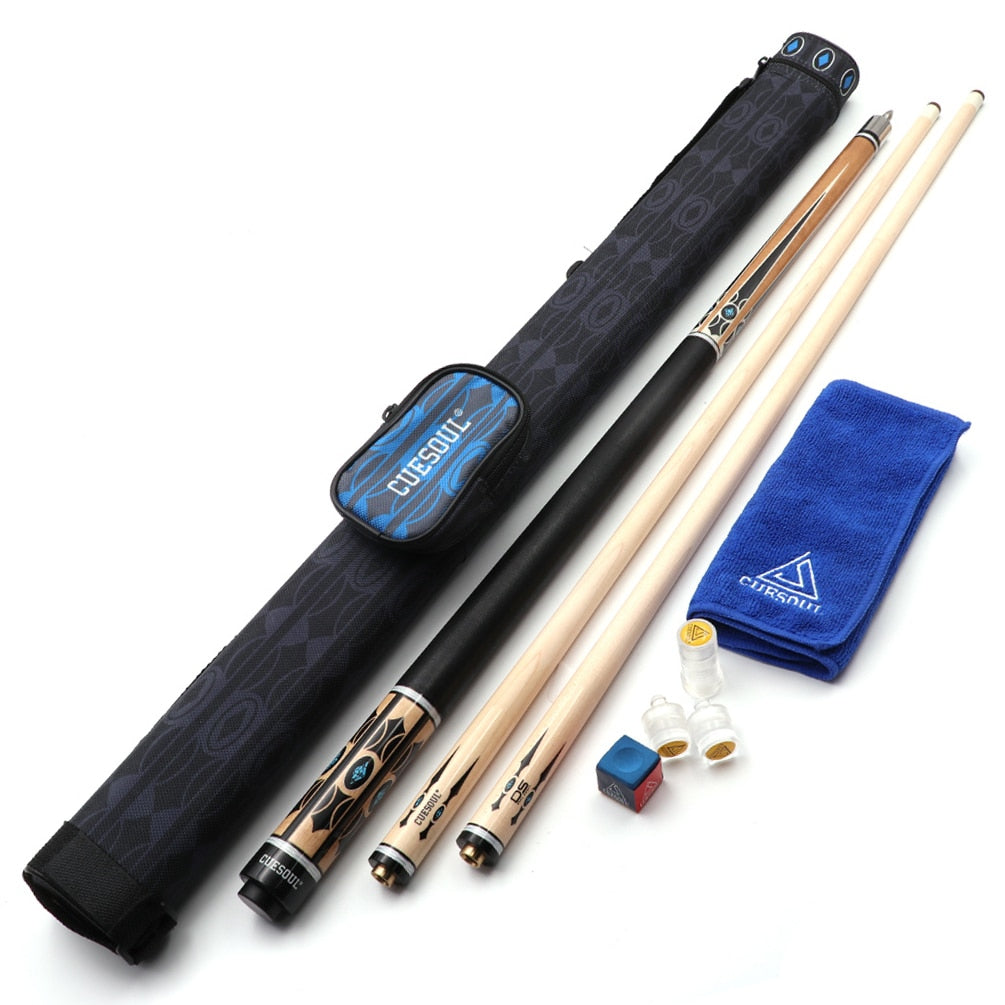
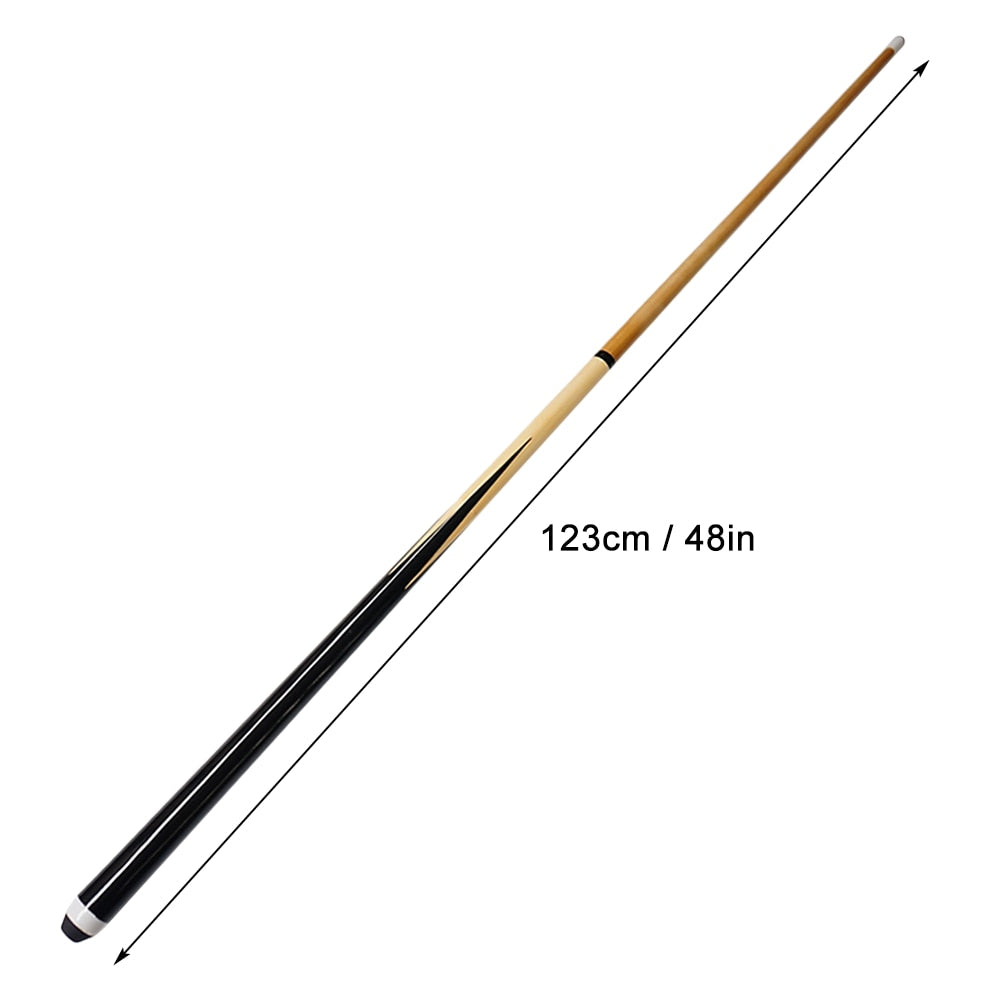
If you're kitting out a family pool table, a two-shaft maple set such as the CUESOUL 58" 19oz DS Maple Pool Cue Stick Set with 2 Shaft,13mm Tip Hard Cue Case 1x1(Cue Set and Cue Shaft only for your choice) gives you a spare shaft and a hard case — genuinely useful if more than one person plays. For a bar or spare 'guest' cue, the budget 48In 1/2 Structure 1Pcs Wooden Pool Cues Billiard House Bar Pool Cues Sticks Entertainment Snooker Accessories Billiard Tools does the job without you worrying about it getting knocked about. It's basic, but that's the point.
Carom cues: built for spin
Carom (three-cushion and libre) is played on a pocketless table, and the whole game is about applying and reading spin off the cushions. That demands a short, stiff, low-deflection cue. A dedicated stick like the ZOKUE Carom Stick Professional Carom Billiard Cue Korean 3 Cushion Billiard Cue Carom Taper 12mm Tip 142 cm Libre Cue with Case has the correct 12mm tip, carom taper and 142cm length — using a snooker or pool cue here really will hamstring you. If you're getting into carom, this is one area where the right tool genuinely matters from day one.
Quick comparison
Here's how a few catalog cues line up across the three disciplines:


The tip is the great equaliser
Whatever cue you choose, the tip is what actually meets the ball — and it wears out. Matching tip hardness and diameter to your game matters more than the badge on the butt. A quality replacement tip such as the Japanese Original KAMUI Clear Cue Tips Billiard Pool Cue KAMUI Tip 14mm SS/S/M/H Snooker Tip Brown 11mm M/MH Billiard Accessory lets you fine-tune an otherwise ordinary cue: a medium tip for all-round control, a harder tip if you're chasing more power on pool breaks.
Don't forget the practice ball
Whichever game you favour, a spare training cue ball is the cheapest upgrade going. A durable resin Billiard Cue Ball Durable Resin Billiard Practice Training Pool Cue Ball Snooker Training Balls Cueball 57mm Table Ball Practice means you can leave a ball out for solo drills without hunting for the set, and it's ideal for grooving cue-ball control and spin.
The bottom line
Buy for the game you actually play most. If it's snooker, prioritise a slim shaft and small tip; for pool, go wider and firmer; for carom, don't compromise on a proper stiff, short cue. None of the options above are premium hand-made pieces — they're sensibly priced imports — but matched to the right discipline, each one will serve you far better than a mismatched 'do-it-all' stick ever could.