3/4-Jointed vs One-Piece Cues: The Travel, Feel and Storage Trade-Offs That Actually Decide It
· Mark O'Sullivan
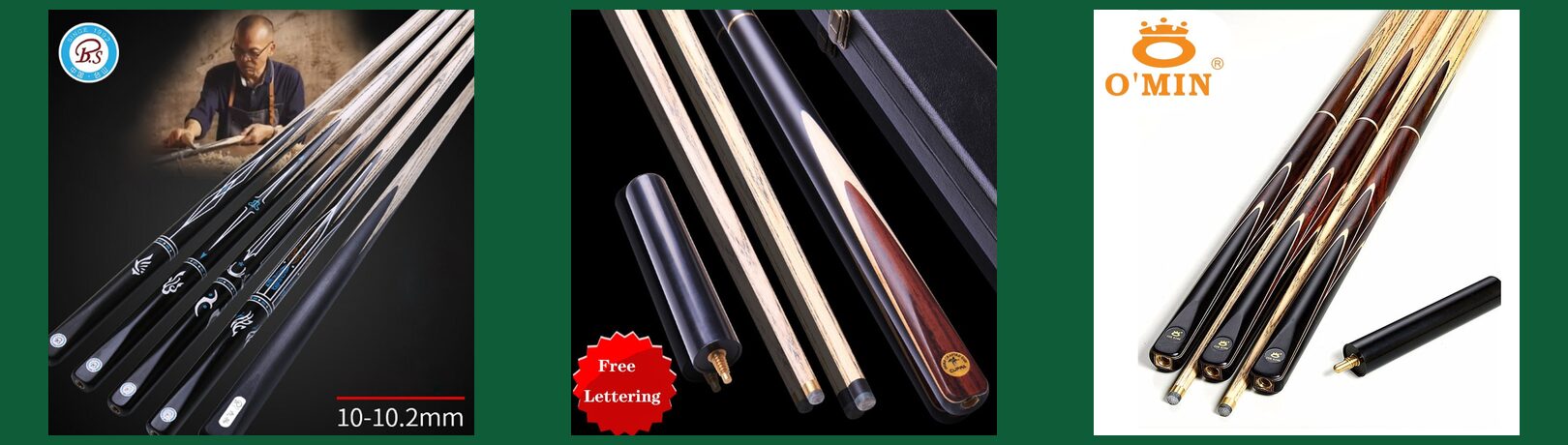
Ask ten snooker players whether a one-piece or a 3/4-jointed cue is "better" and you'll get ten confident answers — most of them contradicting each other. The truth is duller and more useful: neither design is superior on the table. What separates them is how they fit into your life. Where you play, how you get there, how you store the cue and how much you're willing to spend matter far more than any mystical difference in "feel".
This guide skips the tribal arguments and looks at the real trade-offs, so you can pick the cue that suits your circumstances rather than someone else's opinion.
What the two designs actually are
A one-piece cue is exactly that — a single length of timber, typically around 57 or 58 inches, with no joint between butt and shaft. It's the traditional club cue and, in its purest form, the way most professionals learned the game.
A 3/4-jointed cue splits roughly three-quarters of the way up the shaft (nearer the tip than the butt), so the joint sits above where your bridge and grip hands normally fall. That's the key point: the join is placed out of the way of your working hands, so you rarely feel it during a shot. A half-jointed cue, by contrast, splits at the centre and the joint is far more noticeable — which is why serious snooker players avoid it.
Travel and storage: the real decider
This is where the choice usually gets made for you. A one-piece cue is nearly five feet of rigid timber. Carrying it on a bus, folding it into a hatchback boot or wedging it past a doorway is a genuine faff, and every awkward journey is a chance to knock or warp it.
A 3/4 cue breaks down into two comfortable sections that drop into a compact case, so it travels in the back seat, on a train or slung over your shoulder without drama. If you play at a club across town, take your cue to friends' tables, or simply don't have a wall long enough to store a one-piece safely, the 3/4 wins before you've even chalked up. Something like the NEW Cuppa 3/4 Snooker Cues Stick 9.8mm 11.5mm Tip with Snooker Cue Case Set arrives as a ready-to-carry set for exactly this reason.
If, on the other hand, you have a home table and a dedicated rack, the one-piece's inconvenience simply never comes up. A cue like the BS New Arrival One Piece Billiard Snooker Cue Stick 10.2mm Tip with Hard Snooker Cue Case Set ships with a hard case, but in daily use it lives on the wall and never gets folded away.
Does a joint affect how the cue plays?
Honestly? Less than the internet would have you believe. A well-made 3/4 joint sits above your bridge hand and is machined to fit tightly, so most players can't feel it during normal cueing. The perceived "purity" of a one-piece is real but subtle — you might notice a touch more consistent flex and feedback on long power shots, and that's about it.
What matters far more than the joint is the shaft timber, the taper, the tip and the balance. A quality 3/4 cue with good ash and a tidy ferrule will out-play a cheap one-piece every time. Don't let the joint debate distract you from the fundamentals.
Extensions and versatility
One quiet advantage of the jointed design: many 3/4 cues are built to accept an extension at the butt, which is invaluable for those long reaches over the table when a rest won't do. The Handmade Cuppa 3/4 Snooker Cues Sticks 9.8mm Tips With Extension Ebony Wood Handle China Anti Cracking Lacquer Craft includes an extension in the set, and if your cue doesn't, a screw-in Snooker Cue Extender Adjustable Length Telescopic Cue Extension is an inexpensive add-on. One-piece cues can't accept an integrated extension in the same neat way — you're reaching for a telescopic add-on or the rest instead.
A quick comparison
Cost and materials — set your expectations
Most of the cues in our catalogue, including the Cuppa and Omin ranges, are imported, handmade pieces at accessible prices. That means good honest playing cues rather than boutique hand-spliced showpieces. Expect tidy ash shafts, decent joints and a serviceable case — not the flawless finish of a £500 bespoke cue. For the money, they represent sensible value, and the workmanship on models like the High Quality Omin Handmade 3/4 Snooker Cues Stick Billiard 9.5mm/10mm/11.5mm Tip China is genuinely respectable.
If you want a modern alternative, carbon-composite shafts resist warping and travel especially well — the CUPPA New Arrival Little Monster Carbon Billiard Snooker Cue Stick 10.2mm Tip with Snooker Cue Case Set is a jointed example. It's a different feel from timber, so try one before committing if you can.
So, which should you buy?
- Choose a one-piece if you have a home table, a place to store it safely, and you value the traditional single-piece feel above all else.
- Choose a 3/4-jointed cue if you travel to play, need compact storage, want an extension option, or simply want the most practical all-rounder.
For the majority of club and hobby players, the 3/4 is the sensible default — it plays beautifully, protects your investment, and goes wherever you do. The one-piece remains a lovely thing for those with the space and the settled routine to enjoy it. Match the cue to your life, not to an online argument, and you won't go far wrong.