Why Chalk Matters in Snooker: Choosing, Applying and Storing It
Published · Updated · Mark O'Sullivan

Chalk grips your tip to the cue ball, stopping the miscues, poor spin control and skids that ruin frames.
It costs pennies, lives forgotten at the bottom of your case, and most players give it almost no thought — yet chalk touches every single shot you play. A neglected, worn-out cube is a surprisingly common cause of miscues, poor cue-ball control and that horrible scuffing sound when contact goes wrong. Get it right and you'll apply side, screw and stun with confidence, trusting that the tip won't skid off the white.
This guide brings together everything worth knowing about chalk: what it actually does, whether spending more makes any difference, how colour and grip work, how to apply it properly, and how it pairs with your tip and the rest of your kit.
What chalk actually does
Despite the name, snooker and billiard chalk isn't blackboard chalk (calcium carbonate). It's a fine abrasive — typically silica and corundum, or an aluminium-oxide grit, bound with a colourant — designed to roughen the surface of your cue tip. When you brush it on, thousands of tiny particles fill the pores of the leather and cling there, dramatically increasing friction between tip and ball.
That friction is everything. The moment you strike the cue ball off-centre to apply side, screw or top, the tip needs to bite rather than slide. Without enough chalk, the smooth leather glances across the smooth, polished ball and you get the dreaded miscue — a feeble, mis-directed shot that often leaves the white in a dangerous spot.
It's worth being clear about what chalk doesn't do, too. It doesn't create magic or add spin by itself — technique and a healthy tip do that. Chalk simply widens the margin for error at the point of contact. The harder you strike, or the more side you apply, the more grip you need, and chalk is your insurance against slipping.
Does expensive chalk actually play better?
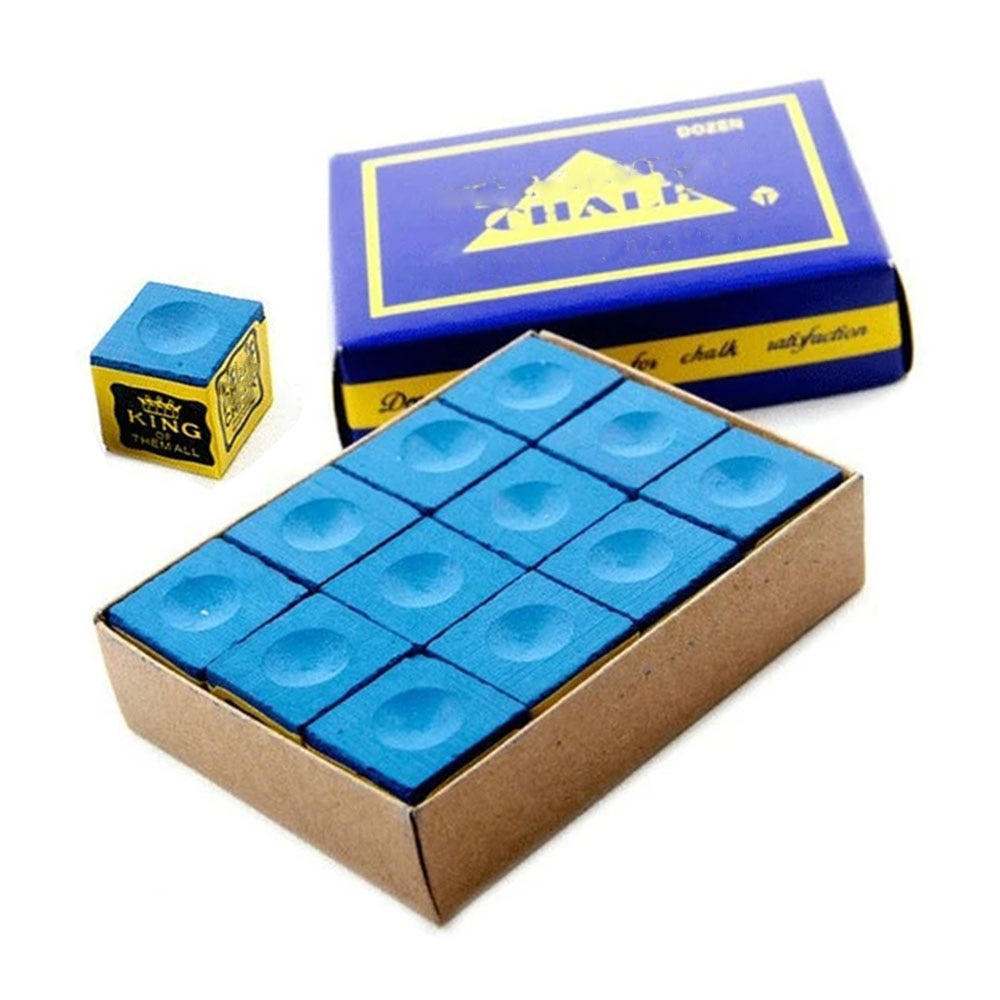
Walk into any club and you'll hear strong opinions about this. The honest answer: for the overwhelming majority of club and home players, a decent budget cube does the job perfectly well. A multi-pack like the 4pcs Cheap Billiards Snooker Cue Chalk Billiard No-slip Chalk Indoor Sport Accessories gives you spares for your case, your table and your kit bag, so you're never caught out mid-frame. These are affordable, imported cubes — set your expectations accordingly. They won't feel like a boutique product, but they hold to the tip and cut down on skids, which is the whole point.
Premium chalks exist because at the very top level, tiny differences in consistency and grip matter over thousands of shots, and they tend to be less dusty and hold to the tip a little better. For most amateur and club players, though, that gap is marginal next to two free habits: chalking properly and keeping the tip in good condition. Most players who "fix" their miscues by switching to expensive chalk have actually fixed a tired, glazed tip at the same time. Spend your money on the things that move the needle first — a better tip or a shaft-care routine will cut your miscue count further than a fancy label.
Colour: does it matter?
Traditional snooker chalk is green to blend with the baize, while pool tables often use blue. There's no performance reason to favour one colour over the other — it's almost entirely cosmetic, about minimising visible marks on the cloth and the cue ball. If you play on a club table, picking a colour close to the cloth keeps things tidy and hides stray deposits.
What matters more than colour is consistency of the powder and how cleanly it applies. A chalk-caked cue ball skids and reacts unpredictably, so it's worth wiping the balls down regularly so residue doesn't quietly ruin your positional play. If you want to see how much chalk you're shedding, a dedicated practice ball such as the Billiard Cue Ball Durable Resin Billiard Practice Training Pool Cue Ball Snooker Training Balls Cueball 57mm Table Ball Practice makes the build-up obvious between wipes — and it's also a good way to feel the difference a fresh coat of chalk makes to spin, versus a tip that's gone a few shots without it.
How to chalk your cue properly
Technique beats brand every time, and this is where most casual players quietly go wrong. The aim is an even, light coating across the whole tip — not a deep crater drilled into one spot.
- Brush, don't grind. Sweep the chalk across the tip with light strokes, tilting or rotating the cue so the whole dome gets covered, including the edges where side-shots make contact.
- Chalk before any shot you doubt. Anything involving side, screw or real power deserves a fresh coat. A gentle roll-up up the table needs it far less.
- Don't drive the cube onto the ferrule. Aim at the leather, not the metal collar below it — grinding straight down wears one side of the chalk and coats only the centre of the tip.
- Don't twist and don't over-chalk. Spinning the cube like a pencil sharpener wears a hollow into the cube; a thick, caked layer just falls onto the cloth and ball rather than gripping any better.
- Keep the chalk dry. Damp chalk clumps and won't transfer properly. Store cubes away from radiators, open windows and condensation.
- Tap off the excess. A light tap after chalking stops loose powder landing on the cloth.
Chalk and tip: a single system, not two purchases
Most players think of chalk and tip as separate items on a shopping list. They aren't. The only thing that matters at the moment of the shot is what happens when leather meets ball, and that's a partnership between the tip and whatever chalk is sitting on it. Chalk can only grip a tip that's shaped and conditioned to accept it — a glazed, over-compressed or bone-hard tip sheds chalk quickly no matter how good the cube is.
A hard, tightly compressed tip has fewer open pores, so it needs a diligent chalking routine and benefits from chalk that lays down a good, even coat. A softer tip grabs and holds chalk more readily but wears faster. If you're chalking constantly and still miscuing, the problem is very often the tip rather than the chalk.
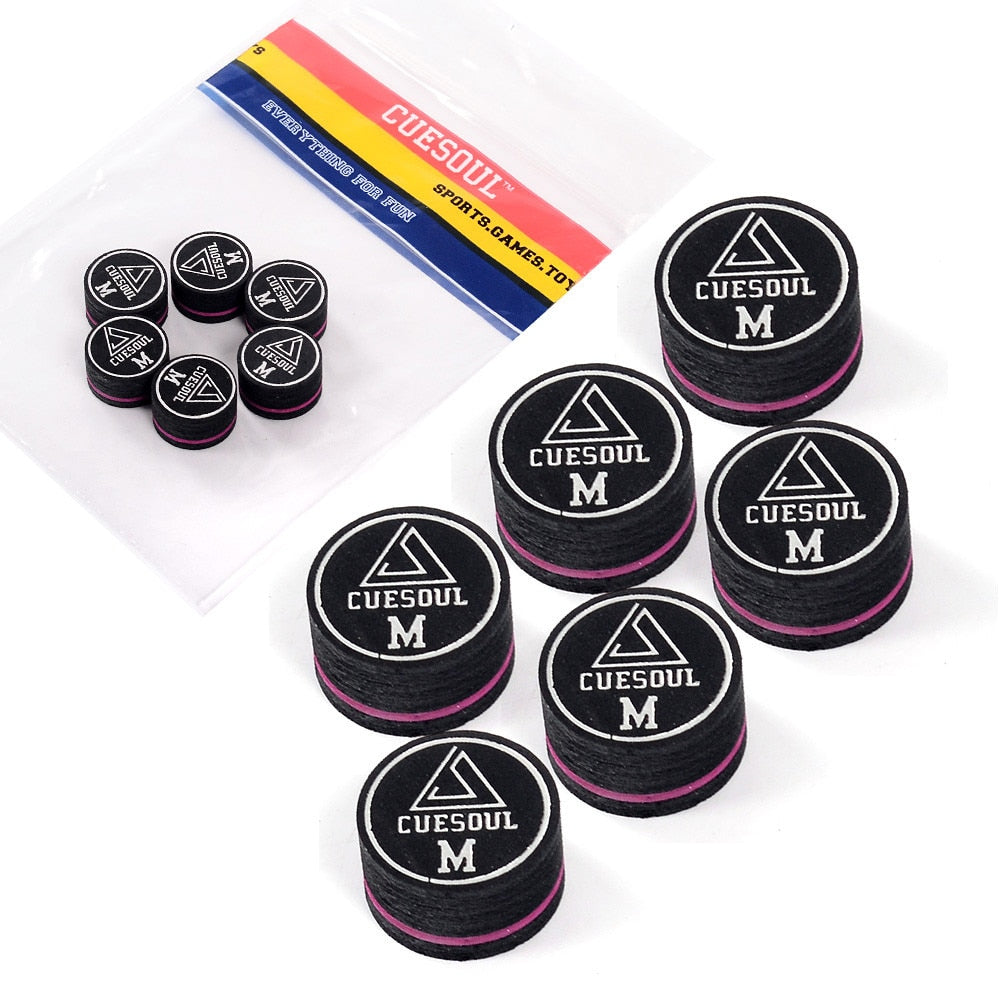
A layered tip such as the Japanese Original KAMUI Clear Cue Tips Billiard Pool Cue KAMUI Tip 14mm SS/S/M/H Snooker Tip Brown 11mm M/MH Billiard Accessory is designed to hold its shape and take chalk consistently over long sessions, which is exactly what keeps contact reliable — often a bigger upgrade than switching chalk brands. If you prefer a traditional feel, a pressed pigskin set like the CUESOUL 6pcs/set 14MM Baked Pig Suede Billiard Snooker Cue Tip & Pool Cue Tip has a more open surface that grabs chalk readily and lets you experiment with feel without a big outlay. For a quick fix on a club or spare cue, the 10PCs/set Screw On Cue Tips For Billiard Pool Cue Stick and Snooker Cue Replacement Parts Stick Repair Tool for Snooker 10mm Hot are hard to beat on convenience, though they're firmer and reward a diligent chalking habit.
Whatever tip you run, keep the surface lightly abraded — a domed, slightly scuffed tip drinks up chalk far better than a smooth, glassy one. A quick scuff restores grip in seconds; it should be a light touch, not a savaging.
A quick look at the supporting kit
Chalk rarely works alone. Here's how a few inexpensive, mostly imported essentials line up for the job they do — treat them as sensible everyday kit rather than tournament-grade specialities.

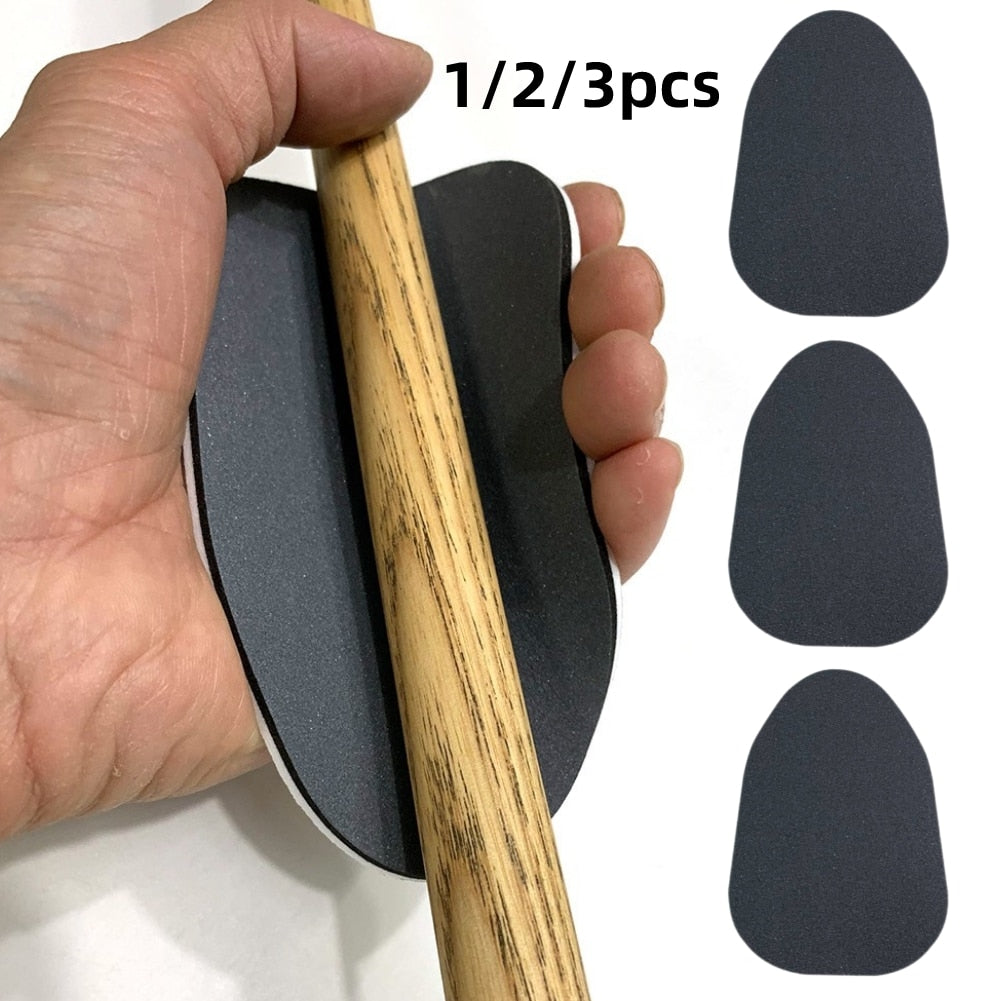
A burnisher and cleaner like the one above helps keep the shaft smooth so your bridge hand glides cleanly, and lets you lightly rough up a glazed tip so it takes chalk again. If chalk dust and sweat are causing a sticky, sluggish delivery, a Spandex Snooker Billiard Cue Glove Pool Left Hand Open Three Finger Accessory for Unisex Women and Men 4 Colors 1Pcs keeps the cue running smoothly through your fingers, which matters just as much as the chalk itself when it comes to a repeatable delivery.
Common chalk mistakes to avoid
- Chalking the ferrule instead of the tip. Aim the cube at the leather, not the metal collar below it.
- Twisting or grinding the cube. This wears a hollow into the chalk and coats only the centre of the tip, leaving the edges bare exactly where side shots make contact.
- Chalking over a dirty or glazed tip. No cube can grip a shiny, over-compressed surface — scuff it lightly first.
- Letting chalk get damp. Damp chalk clumps and cakes instead of powdering evenly. Keep it away from radiators and condensation.
- Blaming chalk for a grip problem. If your bridge hand slips in a warm room, that's a hand issue, not a chalk issue — a glove is the fix, not a different cube.
- Nursing a knackered cube. Once chalk has worn into a deep, uneven crater, cracked into fragments, or picked up grease and glazed over, bin it. It costs pennies — keep a spare in your case.
Storing chalk so it keeps working
Chalk is affected by damp. A cube left in a cold, humid garage will clump and apply unevenly, so keep spares in a small pocket or container in your case rather than loose against your shaft, where they crumble and coat everything in dust. It's also worth wiping the tip and ferrule occasionally — built-up chalk there looks scruffy and can affect how cleanly the tip meets the ball. Buy in small quantities rather than one cube you scrape down over years; a multi-pack means there's always a fresh one in your case, your jacket and on the rail.
The bottom line
Chalk is the smallest investment in your game with one of the biggest returns. Keep a fresh, evenly applied coat on a tip that's in good condition, store your cubes somewhere dry, and never let yourself run out. It won't turn you into a century-breaker overnight, but it will stop the avoidable miscues that quietly ruin frames. Spend a few pounds, chalk up properly, and trust the strike.
Frequently asked questions
Is snooker chalk the same as blackboard chalk?
No. Blackboard chalk is calcium carbonate, while snooker and billiard chalk is a fine abrasive powder, typically silica and corundum or aluminium-oxide grit bound with a colourant. It's designed to roughen the tip and grip the cue ball, not to write with.
Does expensive chalk really make a difference?
At the very top level, yes, in consistency and cleanliness of application over thousands of shots. For most club and home players, a well-applied budget cube paired with a healthy tip closes almost all of that gap.
Does chalk colour affect performance?
No, colour is cosmetic. Green traditionally suits snooker cloth and blue suits pool cloth, mainly so stray deposits and marks are less visible on the table.
Why do I keep miscuing even though I chalk regularly?
The most likely cause is your tip, not your chalk. A glazed, flattened or over-compressed tip won't hold chalk properly no matter how good the cube is, so a light scuff or a tip replacement often fixes it instantly.
How often should I chalk my cue?
Chalk before any shot involving side, screw, top or real power, since these are where slip is most likely. A gentle centre-ball roll-up needs it far less.
What's the correct way to apply chalk?
Brush it lightly across the whole dome of the tip, including the edges, rather than grinding or twisting the cube into the centre. A thin, even coat grips better than a thick, caked one.
Can chalk go off or stop working?
Yes. Damp chalk clumps and cakes instead of powdering evenly, and old chalk can wear into a crater, crack into fragments, or pick up grease and glaze over. Replace it when this happens rather than persevering.
Does chalk affect the cue ball itself?
Yes, excess chalk builds up on the cue ball and cloth over time, which can make the ball skid and react unpredictably. Wiping the balls down regularly, and not over-chalking in the first place, keeps this in check.