How to Check if a Snooker Cue Is Straight
Published · Mark O'Sullivan

A straight cue won't magically make you a better player, but a bent one will quietly undermine everything you do. It makes sighting harder, encourages a crooked delivery, and plants a seed of doubt every time you get down on a shot. The good news is that checking a cue for straightness takes about two minutes and costs nothing. Whether you're buying second-hand, unboxing a new arrival, or just want peace of mind, here's exactly how the pros and cue-makers do it.
The rolling test: the quickest check there is
Rolling a cue on a flat surface is the single most useful test, and it's brilliantly simple. Find a genuinely flat, hard surface — a snooker table bed is ideal, but a smooth kitchen worktop or a glass table works too. Avoid anything soft or textured, which will muffle the result.
- Lay the whole cue flat across the surface, tip to butt.
- Give it a gentle push so it rolls freely across the table.
- Watch the join between the shaft and the surface, and watch the tip end as it rotates.
A straight cue rolls smoothly and evenly, staying in contact with the surface the whole way round. A bent cue will visibly lift, wobble, or "clack" as the bend rises and falls. On a jointed cue, roll each section separately as well as assembled — a cue can have two straight halves that don't line up at the joint, which is a different fault entirely.
One caveat: don't panic at the smallest wobble at the very thin tip end. The last inch or two of a fine ash shaft can flex slightly and still play perfectly. It's a consistent, obvious hump across the middle of the cue that you're looking for.
Sighting down the shaft: the eye test
The rolling test tells you whether there's a bend; sighting tells you where and how bad. Hold the cue up to your eye like a snooker player checking a break-off, with the butt near your cheek and the tip pointing away. Close one eye and look straight down the length of the shaft toward a light source or a window frame.
Slowly rotate the cue. A straight cue looks like a clean, tapering line all the way to the tip. A bent one shows an obvious curve or a "kink" that swings from side to side as you turn it. This method is especially good for spotting a warp that only appears on one plane, which a quick roll can occasionally miss. Do both tests together and you'll rarely be fooled.
What actually counts as acceptable
Here's the reassuring part: no cue is perfectly, laser-straight, and it doesn't need to be. Ash and maple are natural materials that respond to humidity and handling. A tiny amount of movement is normal and has no effect on play. What matters is that the cue rolls without a pronounced lift and sights as a clean line.
As a rough guide, if you can slide a sheet of paper under the bend at its worst point, that's fine. If there's a visible daylight gap you could post a coin through, or the tip end lifts clearly off the table as it rolls, the cue is bent enough to affect your sighting and delivery. Slim, whippy shafts show movement more readily than thicker butts — that's the trade-off for a lively feel, not a defect in itself.
Cues and materials compared
Some designs hold their shape better than others. Traditional one-piece and 3/4 ash cues play beautifully but need care; fibreglass shafts are far more resistant to warping, which suits garages, conservatories and shared club rooms.
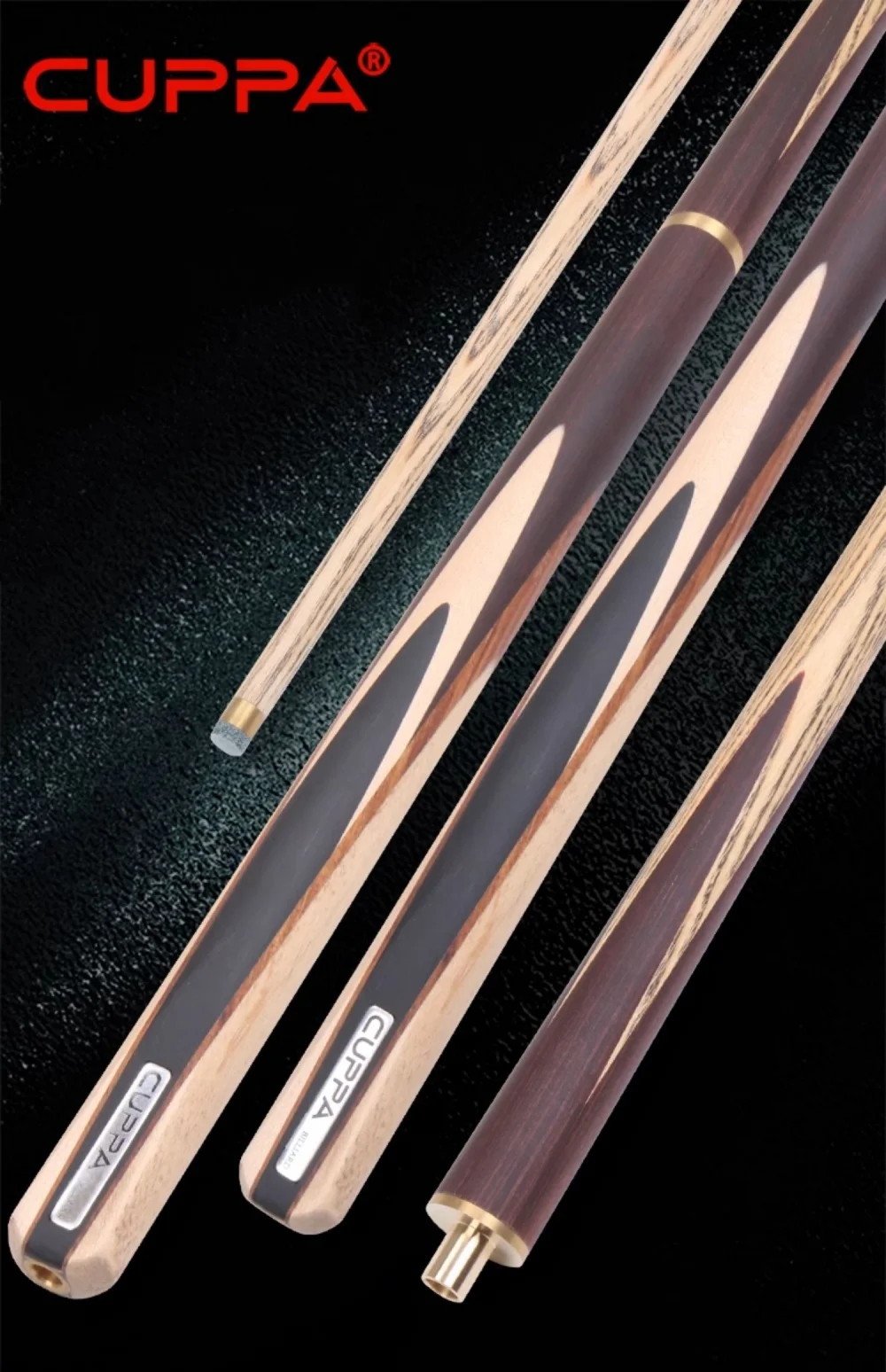
The ash options such as the CUPPA 57" Traditional Snooker Billiard Pool Cue Stick 9.5/10/11.5mm + Extender + Case Set and the POWERGLIDE Executive Ash Snooker Cue 3/4 Jointed 17oz 9.5mm give the classic feel and feedback most players want. If your storage conditions are less than ideal, a fibreglass shaft like the Inferno 2 Piece Fiberglass Snooker & Pool Cue - 9.5mm Layered Tip shrugs off the humidity swings that warp wood.
What to do if it isn't straight
A newly bought cue that fails the rolling test should go straight back — a reputable seller will replace it, and there's no reason to accept a warped item. For a cue you already own and love, don't despair: a slight warp can sometimes settle.
- Store it flat or hanging vertically, never leaning at an angle against a wall — that's the number one cause of warping.
- Rotate it a half-turn every so often if you store it flat, so gravity doesn't pull it one way.
- Keep it out of heat and damp — car boots, radiators and conservatories are cue-killers.
- Give a wooden shaft a gentle clean and burnish with a tool like this 1/2/3pcs Professional Billiard Pool Cue Burnisher Cleaner Polisher Home Cleaning Snooker Pole Training Pool Ball Accessories to keep the timber sealed and stable.
The best cure, though, is prevention. A rigid, well-lined case such as the Funky Chalk Long Hard BLACK 3/4 Snooker Cue Case with REINFORCED CORNERS and Foam Lined Interior - Max Internal Length 116cm supports the cue along its length and protects it from knocks and temperature shocks. A serious bend that won't relax is a job for a professional cue repairer, but honestly, most warped cues are simply cheaper to replace.
The bottom line
Two minutes with a flat table and your own eye will tell you everything you need to know. Roll it, sight it, and judge the result against the real-world standard — smooth roll, clean line, no dramatic lift. Store it sensibly afterwards and your cue will stay true for years.