3/4-Jointed vs One-Piece Cues: Match the Cue to Your Life, Not Just Your Game
· Mark O'Sullivan

Most cue guides start with how a cue plays. That matters — but for a lot of players the real deciding factor isn't the strike, it's how the cue fits into your life. Where do you play? How do you get there? Where does the cue live between frames? Answer those honestly and the choice between a 3/4-jointed and a one-piece cue often makes itself.
Here's a lifestyle-first look at the two designs, so you buy the cue you'll actually use and enjoy rather than the one that looks best on paper.
The quick version
A one-piece cue is a single, unbroken length of timber. Nothing interrupts the wood between butt and tip, which many players say gives the purest, most consistent feel through the shot. A 3/4-jointed cue has a metal joint roughly three-quarters of the way up, so the cue splits into a longer top section and a short butt. That makes it far easier to carry and store, at the cost of a joint most players quickly stop noticing.
Think about transport first
This is usually the biggest single factor. A full-length snooker cue is around 57–58 inches — awkward on a bus, in a small car, or squeezed onto a crowded train. If you travel to a club, take your cue to a mate's table, or simply want something that lives out of the way at home, a 3/4-jointed cue is the sensible choice. Split down, it fits a compact case that tucks behind a seat or over a shoulder.
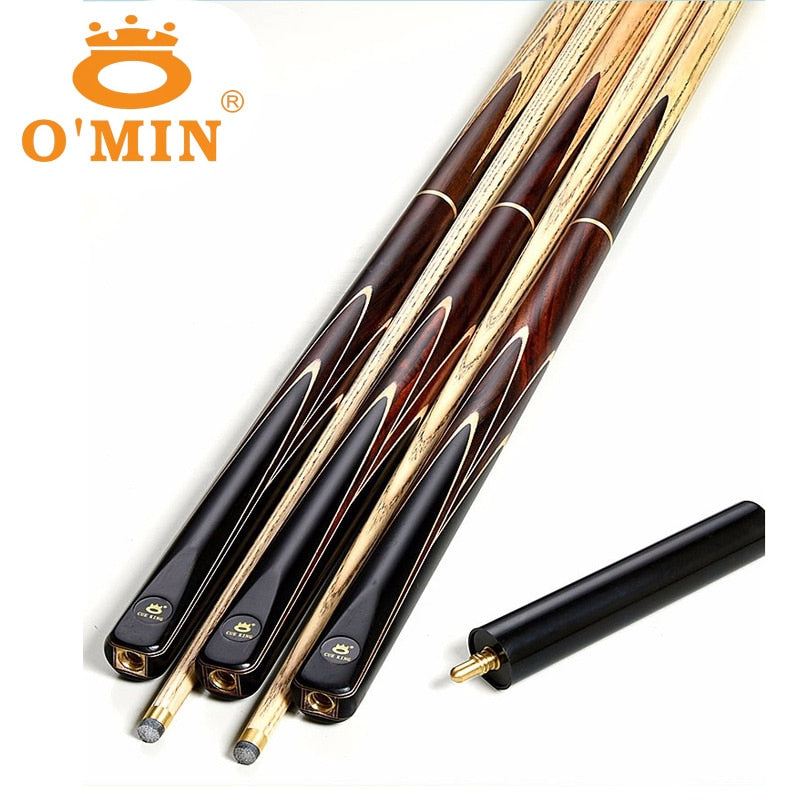
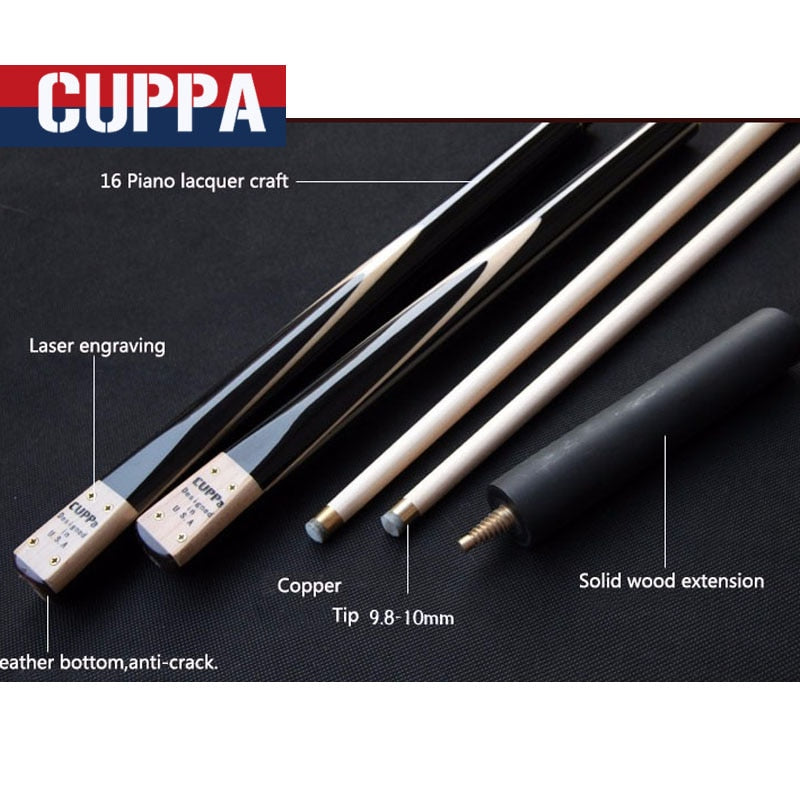
Something like the New Arrival Cuppa 3 /4 Snooker Cues Sticks 9.8mm Tips Snooker Cue Brands China is built exactly for that life: a proper playing cue that packs down without drama. If you want a more premium handle and finish while keeping the same portability, the High Quality Omin Handmade 3/4 Snooker Cues Stick Billiard 9.5mm/10mm/11.5mm Tip China is worth a look.
When a one-piece still wins
If you have a table at home and the cue never really leaves the room, a one-piece cue makes plenty of sense. There's no joint to keep clean, nothing to loosen over time, and the feedback is about as direct as it gets. Just be realistic about storage — you'll want a wall rack or a corner where it can stand straight and dry, not get leaned against a radiator or wedged in a cupboard.
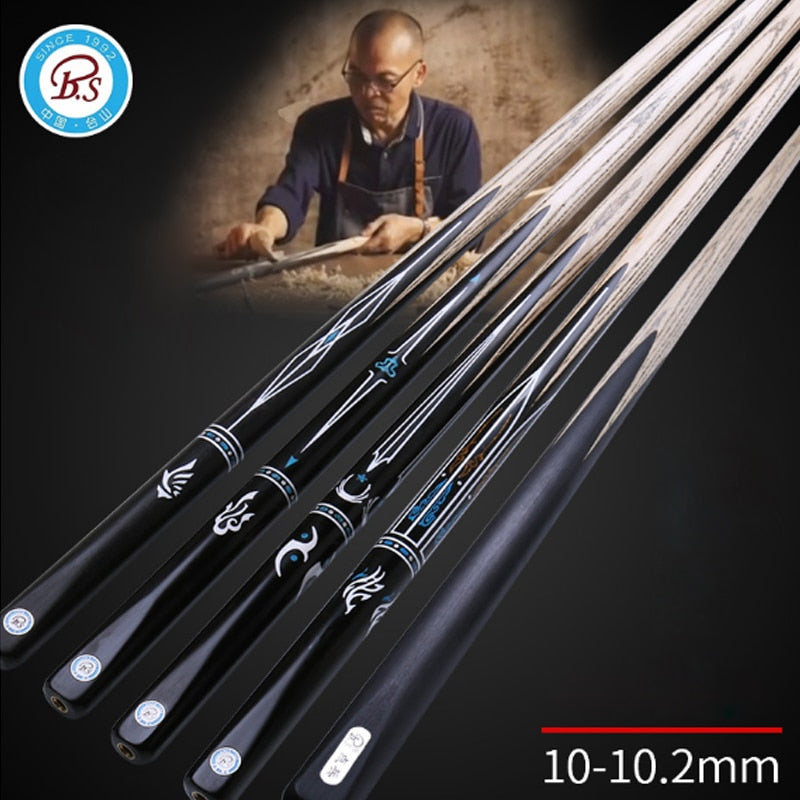
The BS New Arrival One Piece Billiard Snooker Cue Stick 10.2mm Tip with Hard Snooker Cue Case Set is a good example of a one-piece bought sensibly: it ships with a hard case, so the cue is protected even though it doesn't break down.
Does the joint hurt how it plays?
Honestly, far less than beginners fear. A well-made 3/4 joint sits above your bridge hand for most shots, so you rarely feel it. Purists still prefer the seamless flex of one-piece timber, and on very long-power shots the most sensitive players reckon they can tell. For the vast majority of club and home players, technique, tip and chalk matter far more than whether there's a joint in the shaft.
What the joint adds is genuine practicality — including the option of a built-in or add-on extension for those long reaches over the table, as you get with the Handmade Cuppa 3/4 Snooker Cues Sticks 9.8mm Tips With Extension Ebony Wood Handle China Anti Cracking Lacquer Craft.
A quick comparison
These are all playable cues from the catalogue, chosen to show the range across both designs and a few price points. Treat prices and specs as a starting point and check the current listing before buying.

The reach problem, solved either way
One quiet advantage of the 3/4 format is how naturally it handles the long shots that leave you stretching. Many jointed cues take an extension into the butt, adding several inches without changing the balance too much. If your cue doesn't include one, a separate Snooker Cue Extender Adjustable Length Telescopic Cue Extension is an inexpensive fix — and it works for one-piece owners too, provided the butt is threaded for it.
Setting honest expectations
Most cues in this price bracket are imported and hand-finished, which means you'll see small variations in wood grain, weight and lacquer between individual cues. That's normal at this level and not a fault. What you should get is a straight, playable cue that holds up to regular use. If you're chasing tour-level tolerances and a lifetime of ownership, you'll eventually spend a good deal more — but as a first or second cue, these represent sensible value.
So, which is right for you?
- Choose a 3/4-jointed cue if you travel to play, share tables, have limited storage, or simply like the reassurance of a compact case and an easy extension option.
- Choose a one-piece cue if you play mainly at a home table, value the most direct possible feel, and have somewhere safe to store it upright.
Both designs can play beautifully. The best cue is the one that suits how and where you actually play — so start there, then let feel and budget narrow it down. Get that right and you'll pick up your cue more often, which is really the whole point.